Also known asCumquat · Fortunella · Citrus japonica · 金桔 · 金橘
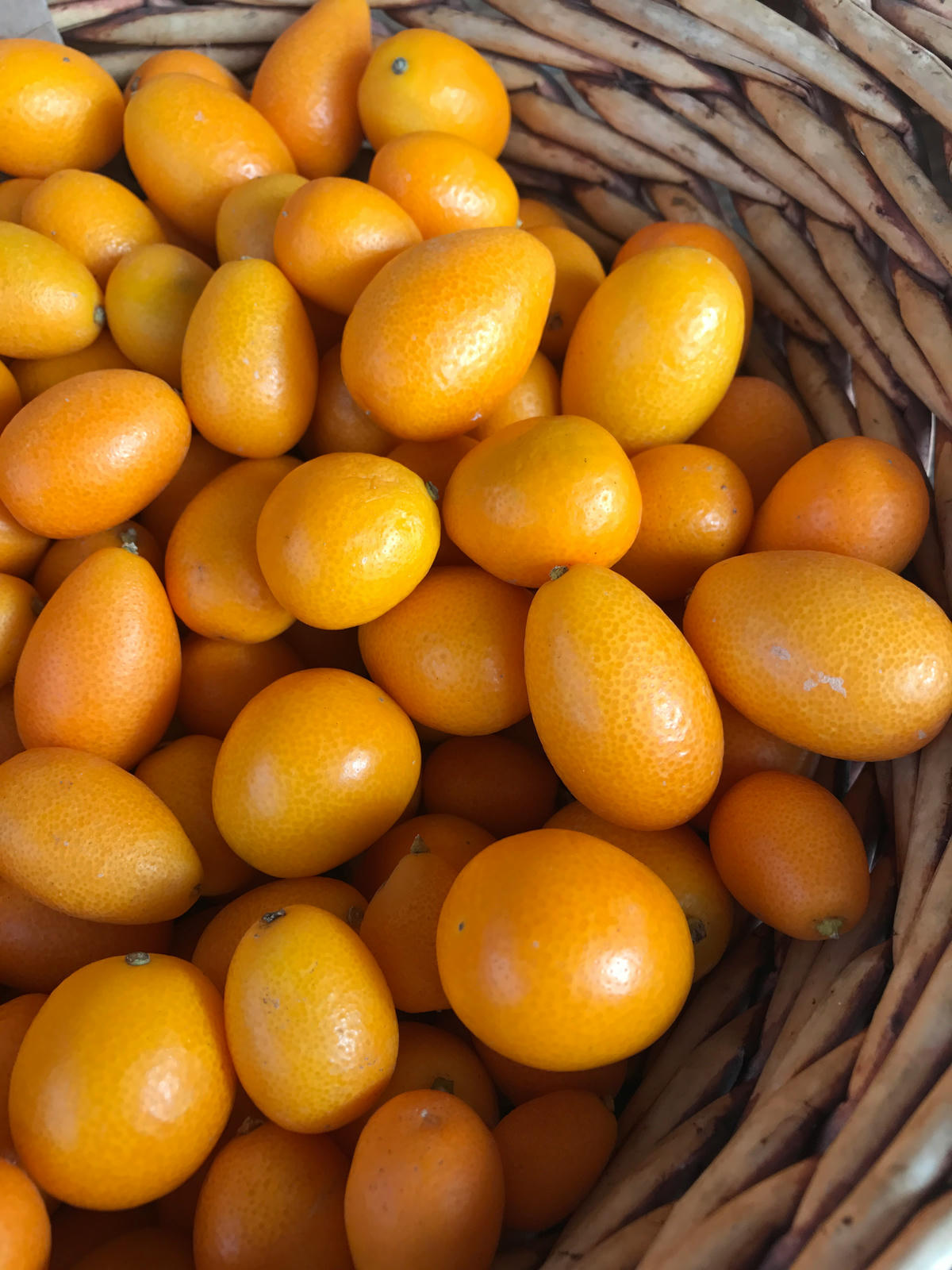
Name: Kumquat (genus Fortunella). The most widely grown species is the oval or Nagami kumquat (Fortunella margarita); the round Marumi kumquat (F. japonica) and the sweet-skinned Meiwa kumquat (F. crassifolia, a natural hybrid of the two) are the other common varieties, all referred to simply as “kumquat.”
Description
Kumquats are native to eastern Asia and are unusual among citrus fruits in being eaten whole, skin and all — the small, oval-to-round fruit reverses the usual citrus arrangement, with a sweet, edible peel wrapped around tart, juicy flesh. The trees are compact, mostly thornless shrubs that rarely exceed about 3.5 metres, making kumquats popular as ornamental plants as well as a fruit crop; potted kumquat branches are even used as Christmas decorations in parts of the United States.
In China, where the fruit has long been cultivated, kumquats are frequently candied or preserved in syrup, and in the U.S. breeders have crossed kumquats with limes, mandarins, and other citrus to create hybrids such as the calamondin and limequat.
Main nutrition value
Show all nutrients
Kumquats stand out for their fiber content — unusually high for a citrus fruit, largely because the whole peel is eaten — alongside a solid dose of vitamin C and useful potassium and calcium.
How best to be consumed
Kumquats are meant to be eaten whole, skin included — popped straight into the mouth, sometimes lightly squeezed or bitten first to release the sweet peel oils against the tart pulp. They also hold up well cooked, candied, or preserved into marmalade, which softens the peel and rounds out the tartness.
Overconsumption could cause…
Because the whole fruit, peel included, is eaten, a large serving of kumquats delivers more fiber than most citrus fruits and can cause digestive discomfort or bloating if eaten in excess. Otherwise the same general citrus considerations apply: the tart pulp and peel oils are acidic enough that very frequent, heavy intake could contribute to tooth enamel wear over time.
U.S. Department of Agriculture, FoodData Central — Kumquats, raw (FDC ID 168154), 100g portion: https://fdc.nal.usda.gov/food-details/168154/nutrients Encyclopaedia Britannica — Kumquat: https://www.britannica.com/plant/kumquat
Comments
No comments yet.
Log in to leave a comment.