Also known asSweet Orange · Citrus sinensis · 橙 · 橙子
Name: Orange, sweet orange (Citrus × sinensis). Sold under several varietal names that are all the same species, not different fruits: navel orange, Valencia orange, blood orange, Cara Cara orange, and low-acid types sold as “acidless” or “sucrena” oranges.
Description
The sweet orange is a hybrid — genetically roughly 58% mandarin and 42% pomelo — that first arose in a region spanning southern China, northeast India, and Myanmar. The earliest known written reference to it appears in Chinese records from 314 BC.
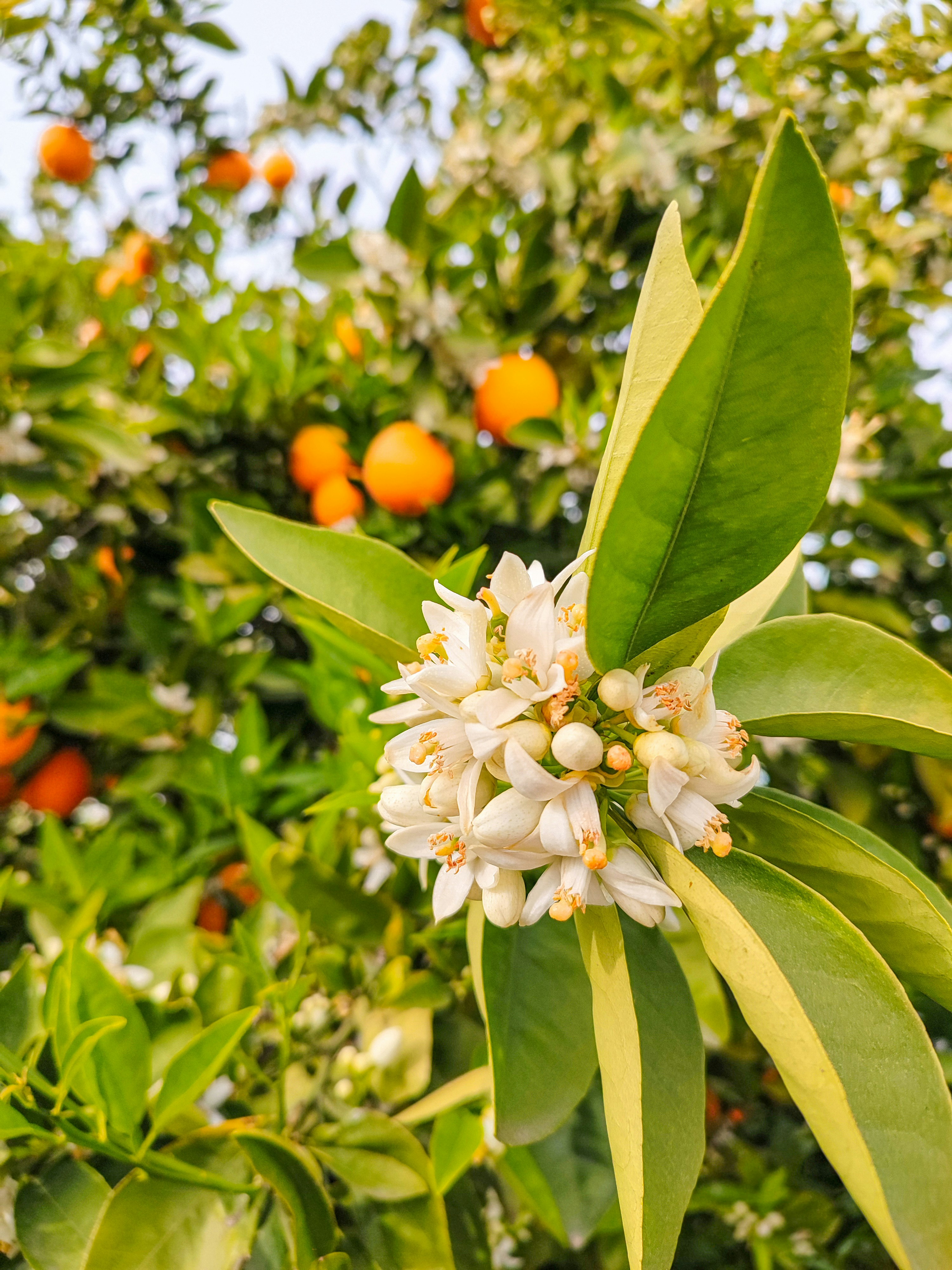
Citrus cultivation reached the Mediterranean through the Arab Agricultural Revolution, and sweet oranges themselves arrived in Europe via Italian and Portuguese traders around the late 15th and early 16th centuries, prized enough that wealthy households built dedicated glass-walled “orangeries” just to grow them. Spanish colonizers carried orange trees to the Americas starting in 1493, and California's commercial orange industry took off after navel-orange cuttings arrived from Brazil in 1873. The English word “orange” traces back through Old French and Arabic to a Sanskrit root, nāraṅga.
Main nutrition value

Show all nutrients
Oranges are best known for vitamin C — about 59mg per 100g, roughly two-thirds of a day's value — but also contribute meaningful potassium and fiber, plus smaller amounts of magnesium, zinc, copper, and iron.
How best to be consumed
Eating the whole fruit keeps the fiber that juicing strips out — a medium orange has close to the vitamin C of a serving of orange juice, without the sugar concentration and fiber loss that comes from removing the pulp. The zest — the outer colored peel, avoiding the bitter white pith underneath — carries aromatic oils useful in cooking and baking. Segments keep well in salads, and the peel can be candied or turned into marmalade, traditionally from the more bitter Seville variety.
Overconsumption could cause…
Oranges are safe for most people in ordinary amounts, but eating large quantities regularly is worth being mindful of: the natural sugars (mostly sucrose, glucose, and fructose) add up quickly in juice form, since it's easy to drink several oranges' worth of sugar in one glass without the fiber that would normally slow it down; the fruit's acidity can contribute to tooth enamel erosion or aggravate heartburn in people prone to acid reflux; and a lot of citrus fiber at once can cause bloating or loose stools. None of this applies to a typical serving — it mainly matters for juice-heavy diets or very large daily intakes.
Comments
No comments yet.
Log in to leave a comment.