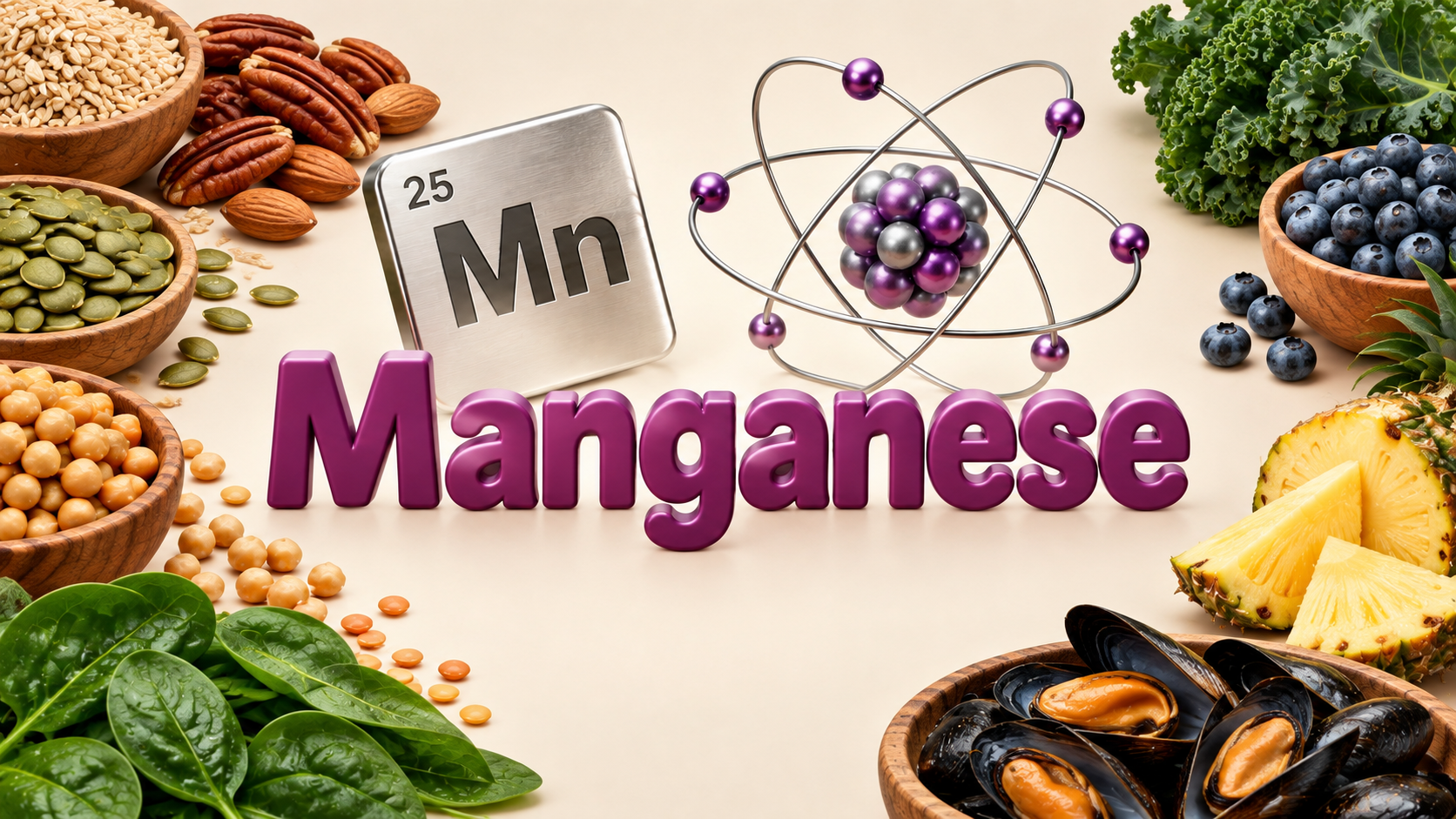
Manganese is a trace mineral needed for forming bone, processing carbohydrate, protein and cholesterol, healing wounds and protecting cells from damage. It is found in wholegrains, nuts, legumes and tea, and most people get enough.
What is it?
Manganese is a helper for several enzymes, including manganese superoxide dismutase, an antioxidant enzyme in the cell's energy-producing mitochondria. The body holds only about 10 to 20 mg, mostly in bone, liver, kidney and pancreas.
What it does
- Helps form bones and connective tissue
- Helps the body use carbohydrate, protein and cholesterol
- Is needed for blood clotting and wound healing
- Is part of an antioxidant enzyme that protects cells
Food sources
Mussels, hazelnuts, pecans, brown rice, oats, wholegrain bread, chickpeas, soybeans, pineapple, spinach and sweet potato are good sources. Tea is a major source in many diets, because tea leaves are very rich in manganese.
Singapore food examples
- Brown rice, oats and wholegrain bread
- Chickpeas, soybeans, tofu and tempeh
- Pineapple and sweet potato
- Tea — green, black and oolong
- Mussels and other shellfish
- Spinach and nuts
How much do I need?
Singapore's RDA table on HealthHub does not list this nutrient, so the figures below come from US and Canadian reference intakes (Dietary Reference Intakes). Use them as a guide, and see Singapore's age- and sex-specific Recommended Dietary Allowances (HealthHub) for the nutrients Singapore does list.
The US National Academies set an Adequate Intake of 2.3 mg a day for men and 1.8 mg for women (2.0 mg in pregnancy, 2.6 mg when breastfeeding).
Low intake and deficiency
Manganese deficiency is very rare in people. In experimental diets it has caused skin rash, low cholesterol and changes in mood and bone. It is not a recognised problem for people who eat a normal diet.
Too much and safety
The upper limit is 11 mg a day for adults, from food, water and supplements. Excess manganese is toxic to the nervous system and can cause tremor, muscle stiffness and a Parkinson-like condition, known from miners and welders breathing high levels, and from long-term heavily contaminated drinking water.
People with liver disease and those receiving long-term intravenous nutrition are at higher risk of manganese build-up. Avoid manganese supplements unless advised by a doctor.
Absorption and bioavailability
Only 1 to 5 percent of dietary manganese is absorbed. Low iron stores increase absorption. Calcium, iron and phytates in wholegrains can reduce it; the body also excretes excess through the bile, so levels stay in a fairly tight range.
Connection to daily life
- Bone health: involved in forming bone, along with calcium and vitamin D
- Healthy eating pattern: wholegrains, nuts and legumes supply manganese without needing supplements
- Safety: supplements and well water in some areas are the main routes to excess
Sources: 1. NIH Office of Dietary Supplements — Manganese Fact Sheet for Health Professionals: https://ods.od.nih.gov/factsheets/Manganese-HealthProfessional/ 2. HealthHub Singapore — Recommended Dietary Allowances: https://www.healthhub.sg/well-being-and-lifestyle/food-diet-and-nutrition/recommended_dietary_allowances 3. Health Promotion Board — Singapore Food Insights Database (SG FoodID): https://www.hpb.gov.sg/healthy-living/food-and-beverage/sgfoodid/ 4. FAO/INFOODS — Food composition tables and databases: https://www.fao.org/food-composition/tables-and-databases/en/ 5. NIH Office of Dietary Supplements — all fact sheets: https://ods.od.nih.gov/factsheets/list-all/
Comments
No comments yet.
Log in to leave a comment.