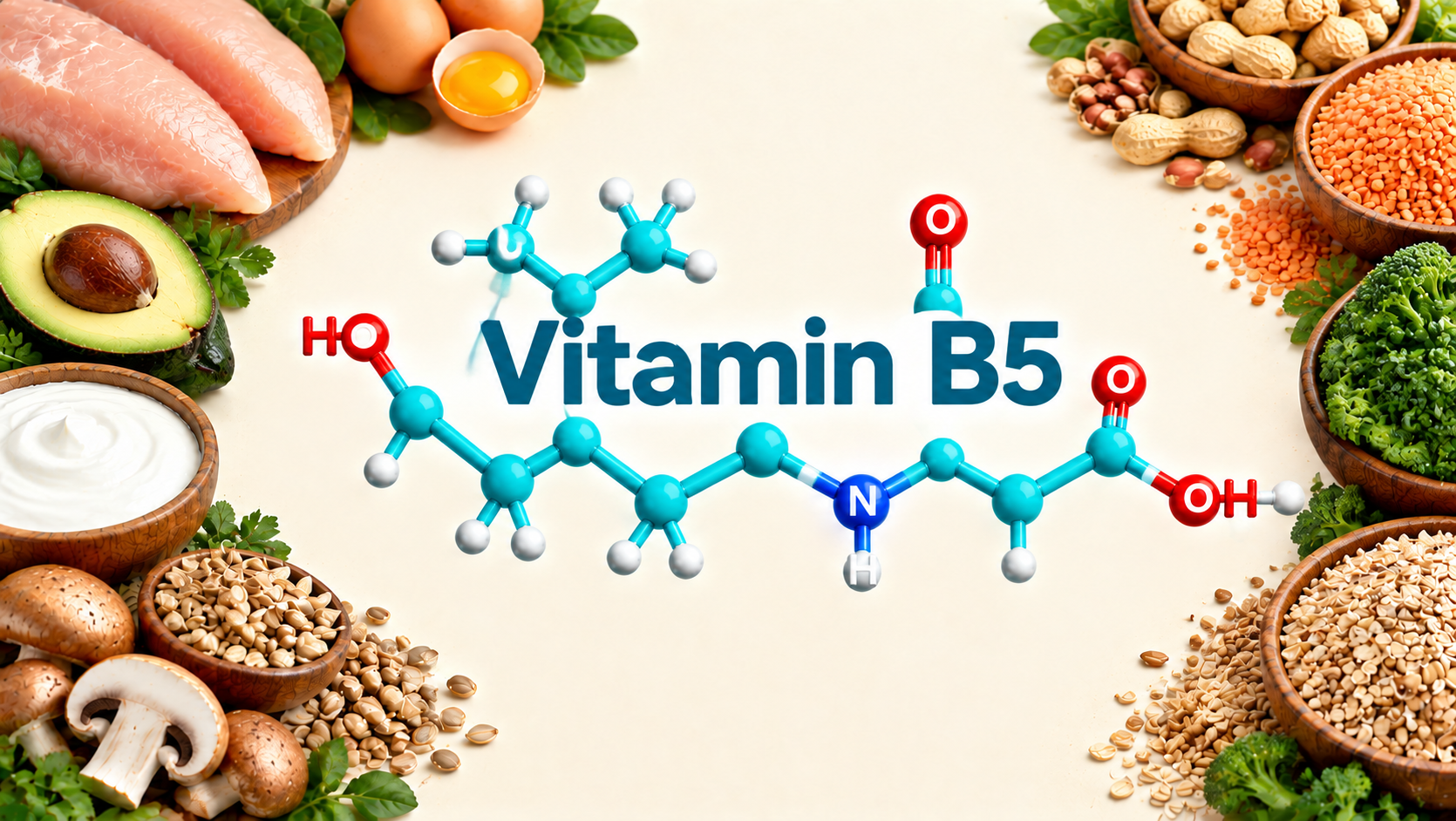
Pantothenic acid (vitamin B5) is needed to make coenzyme A, a molecule involved in releasing energy from food and building fats and hormones. It is found in almost every food, so true deficiency is very rare.
What is it?
The name comes from the Greek "pantothen", meaning "from everywhere" — an accurate description of how widely it occurs in food. Pantothenic acid is water-soluble and is part of coenzyme A (CoA) and acyl carrier protein, which help build and break down fatty acids and many other compounds.
What it does
- Helps release energy from carbohydrate, fat and protein
- Is needed to make and break down fatty acids and cholesterol
- Is used in making steroid hormones and certain neurotransmitters
- Supports the production of red blood cells
Food sources
Beef, chicken, organ meats such as liver, eggs, mushrooms (shiitake especially), avocado, sweet potato, yoghurt, legumes and whole grains are the best sources. Smaller amounts occur in most vegetables.
Singapore food examples
- Chicken and beef dishes — chicken rice, beef noodle soup
- Eggs with breakfast
- Shiitake and other mushrooms in soups, braises and stir-fries
- Sweet potato and yam
- Avocado, plain yoghurt and lentil or chickpea dishes
- Brown rice, oats and wholegrain bread
How much do I need?
Singapore's RDA table does not list pantothenic acid. The US National Academies set an Adequate Intake (AI), based on typical intakes in healthy people, of 5 mg a day for adults, 6 mg in pregnancy and 7 mg when breastfeeding. A varied diet usually provides this. See Singapore's age- and sex-specific Recommended Dietary Allowances (HealthHub) for the nutrients Singapore does list.
Low intake and deficiency
Deficiency is rare and has been seen mainly in severe malnutrition and in experiments using a pantothenic-acid-blocking diet. Reported symptoms include fatigue, irritability, numbness and a burning sensation in the feet, and stomach upset.
Too much and safety
No upper limit has been set. Pantothenic acid is not known to be toxic, though very high supplemental doses (around 10 grams a day) can cause diarrhoea. Supplements are not needed by people who eat a normal varied diet.
Absorption and bioavailability
Food pantothenic acid is mostly in the form of CoA, which the gut breaks down before absorbing the vitamin. About half of dietary pantothenic acid is absorbed.
Refining grains, canning, freezing and long cooking can reduce the amount in foods, so minimally processed foods keep more of it.
Connection to daily life
- Energy: part of the pathways that fuel everyday activity and exercise — see Exercise
- Stress: used to make stress hormones, but eating more does not reduce stress — see Stress for what does help
- Skin and hair: marketed in supplements, but evidence for benefit exists only in true deficiency
- Works alongside the other B vitamins, including biotin and riboflavin
Sources: 1. NIH Office of Dietary Supplements — Pantothenic Acid Fact Sheet for Health Professionals: https://ods.od.nih.gov/factsheets/PantothenicAcid-HealthProfessional/ 2. HealthHub Singapore — Recommended Dietary Allowances: https://www.healthhub.sg/well-being-and-lifestyle/food-diet-and-nutrition/recommended_dietary_allowances 3. Health Promotion Board — Singapore Food Insights Database (SG FoodID): https://www.hpb.gov.sg/healthy-living/food-and-beverage/sgfoodid/ 4. FAO/INFOODS — Food composition tables and databases: https://www.fao.org/food-composition/tables-and-databases/en/ 5. NIH Office of Dietary Supplements — all fact sheets: https://ods.od.nih.gov/factsheets/list-all/
Comments
No comments yet.
Log in to leave a comment.