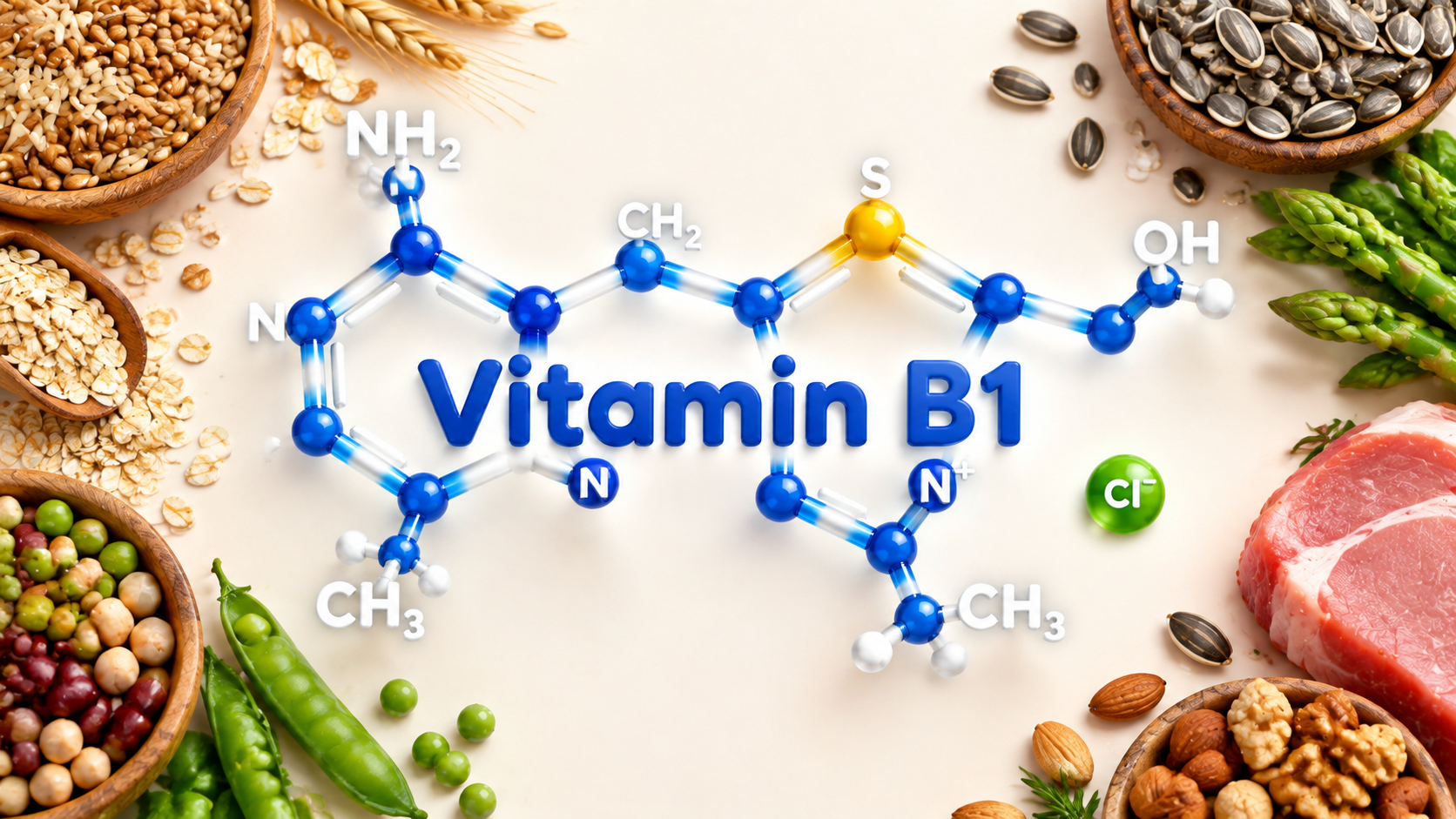
Thiamin (vitamin B1) helps the body turn the carbohydrate in food into energy and keeps nerves, muscles and the heart working normally. It is found in whole grains, pork, legumes and seeds, and it is easily lost when grains are polished or vegetables are boiled.
What is it?
Thiamin was the first B vitamin to be identified. It is water-soluble, so the body stores only small amounts and needs a regular supply from food. Inside cells it works as a helper (coenzyme) in the reactions that release energy from carbohydrate and some amino acids.
What it does
- Helps convert carbohydrate into usable energy in every cell
- Supports normal nerve signalling and muscle function
- Supports normal heart function
- Plays a part in the metabolism of some amino acids
Food sources
The richest sources are pork, fish such as trout and tuna, sunflower seeds, legumes (black beans, lentils), whole grains and fortified breakfast cereals. Enriched and wholegrain grains contribute a lot because they are eaten so often.
Singapore food examples
- Lean pork in soups, bak kut teh or stir-fries
- Brown rice, wholegrain bread and oats instead of polished white rice or white bread now and then
- Dhal, chickpeas and other legumes in curries and salads
- Tofu, tempeh and soya beans
- Peanuts and sunflower seeds as snacks
- Fortified cereals and malted drinks — check the label
How much do I need?
Singapore's adult RDA for thiamin depends on age and sex, because it scales with energy intake: about 1.18 mg a day for men aged 18 to under 30, 1.16 mg for men 30 to under 60 and 0.98 mg for men 60 and over; about 0.84, 0.86 and 0.80 mg for women in the same age bands. Pregnancy and breastfeeding add a little more. See Singapore's age- and sex-specific Recommended Dietary Allowances (HealthHub) for the full tables.
Low intake and deficiency
Severe deficiency causes beriberi, which can affect the nerves (tingling, weakness, burning feet) and the heart (breathlessness, swelling). In people who drink heavily, deficiency can cause Wernicke-Korsakoff syndrome, a serious brain condition that needs urgent medical care.
Deficiency is uncommon in people who eat a varied diet. Higher-risk groups include people with long-term heavy alcohol use, older adults with poor appetite, people after weight-loss (bariatric) surgery, people with persistent vomiting, and people who rely mainly on polished white rice or highly refined foods.
Too much and safety
No upper limit has been set for thiamin, because the body clears the excess in urine and no harm from food or supplements has been reported at high intakes. A multivitamin or B-complex supplement is generally considered safe, but more is not better, and it does not replace a varied diet.
Absorption and bioavailability
Thiamin dissolves in water and is damaged by heat, so a lot can be lost when vegetables are boiled and the water is thrown away. Steaming, microwaving and keeping the soup or cooking liquid helps.
Milling rice and wheat removes the bran and germ, where most of the thiamin is. Rinsing rice vigorously and draining off the cooking water removes more. Raw fish and shellfish contain enzymes (thiaminases), and tea and coffee contain compounds that may reduce absorption, but these matter mainly when intake is already low.
Connection to daily life
- Energy and exercise: needed to release energy from carbohydrate, so needs rise with higher energy intake and training — see Exercise
- Nerve and heart health: supports normal nerve and heart function
- Alcohol: regular heavy drinking lowers thiamin status — one reason to keep alcohol low
- Healthy ageing: appetite often falls with age, so a varied diet matters more
Sources: 1. NIH Office of Dietary Supplements — Thiamin Fact Sheet for Health Professionals: https://ods.od.nih.gov/factsheets/Thiamin-HealthProfessional/ 2. HealthHub Singapore — Recommended Dietary Allowances: https://www.healthhub.sg/well-being-and-lifestyle/food-diet-and-nutrition/recommended_dietary_allowances 3. Health Promotion Board — Singapore Food Insights Database (SG FoodID): https://www.hpb.gov.sg/healthy-living/food-and-beverage/sgfoodid/ 4. FAO/INFOODS — Food composition tables and databases: https://www.fao.org/food-composition/tables-and-databases/en/ 5. NIH Office of Dietary Supplements — all fact sheets: https://ods.od.nih.gov/factsheets/list-all/
Comments
No comments yet.
Log in to leave a comment.