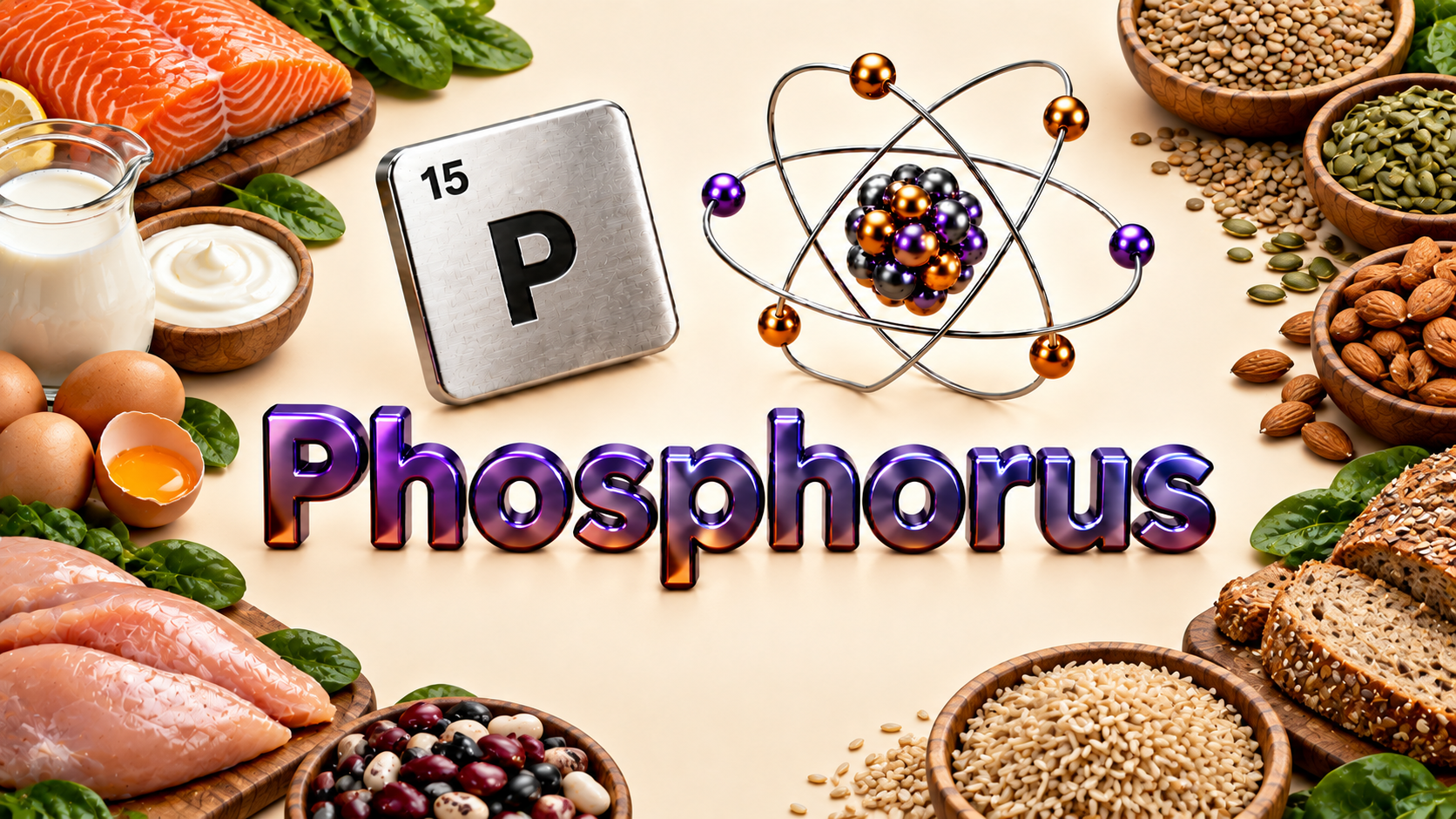
Phosphorus is the second most abundant mineral in the body after calcium. About 85 percent is in bones and teeth, and the rest is part of DNA, cell membranes and ATP, the body's energy currency. It is in almost every food, so deficiency is rare.
What is it?
Phosphorus is a major mineral that exists in the body mainly as phosphate. Food contains both natural (organic) phosphorus and phosphate additives, which are used widely in processed foods and drinks.
What it does
- Builds bones and teeth together with calcium
- Is part of ATP, the molecule that stores and moves energy
- Forms DNA, RNA and the phospholipids of cell membranes
- Helps keep the body's acid-base balance steady
Food sources
Dairy products, meat, poultry, fish, eggs, legumes, nuts and wholegrains are the main natural sources. Processed meats, cola drinks, processed cheese and many ready meals contain added phosphates.
Singapore food examples
- Fish, chicken, pork and beef
- Eggs, milk, yoghurt and cheese
- Tofu, tempeh, dhal and other legumes
- Nuts and seeds
- Wholegrain bread, oats and brown rice
- Cola, processed cheese and processed meats (additives)
How much do I need?
Singapore's RDA table on HealthHub does not list this nutrient, so the figures below come from US and Canadian reference intakes (Dietary Reference Intakes). Use them as a guide, and see Singapore's age- and sex-specific Recommended Dietary Allowances (HealthHub) for the nutrients Singapore does list.
The US National Academies' RDA for adults is 700 mg a day, rising to 1,250 mg for ages 9 to 18. Most adults eat more than this.
Low intake and deficiency
Low phosphorus is unusual in healthy people. It can occur with prolonged use of certain antacids, alcohol use disorder, uncontrolled diabetes, refeeding after prolonged starvation, and some genetic conditions. Signs include muscle weakness, bone pain, loss of appetite and confusion.
Too much and safety
The upper limit is 4,000 mg a day for adults aged 19 to 70, 3,000 mg for those over 70. High phosphorus matters mostly in chronic kidney disease, where the kidneys cannot remove it, leading to blood vessel and bone damage. People with kidney disease are often advised to limit phosphate additives and some high-phosphorus foods.
Large amounts of phosphate additives in the diet may also be unhelpful for bones and blood vessels; eating more whole and fresh foods lowers intake.
Absorption and bioavailability
About 40 to 70 percent of the phosphorus in food is absorbed. In plant foods, much of it is stored as phytate, which people absorb poorly (leavened bread and sprouting reduce phytates). Phosphate additives are absorbed almost completely, around 90 to 100 percent.
Connection to daily life
- Bone health: works with calcium and vitamin D
- Energy: part of ATP, so involved in every kind of activity — see Exercise
- Kidney health: people with kidney disease need personal advice from their doctor or dietitian on phosphorus
Sources: 1. NIH Office of Dietary Supplements — Phosphorus Fact Sheet for Health Professionals: https://ods.od.nih.gov/factsheets/Phosphorus-HealthProfessional/ 2. HealthHub Singapore — Recommended Dietary Allowances: https://www.healthhub.sg/well-being-and-lifestyle/food-diet-and-nutrition/recommended_dietary_allowances 3. Health Promotion Board — Singapore Food Insights Database (SG FoodID): https://www.hpb.gov.sg/healthy-living/food-and-beverage/sgfoodid/ 4. FAO/INFOODS — Food composition tables and databases: https://www.fao.org/food-composition/tables-and-databases/en/ 5. NIH Office of Dietary Supplements — all fact sheets: https://ods.od.nih.gov/factsheets/list-all/
Comments
No comments yet.
Log in to leave a comment.