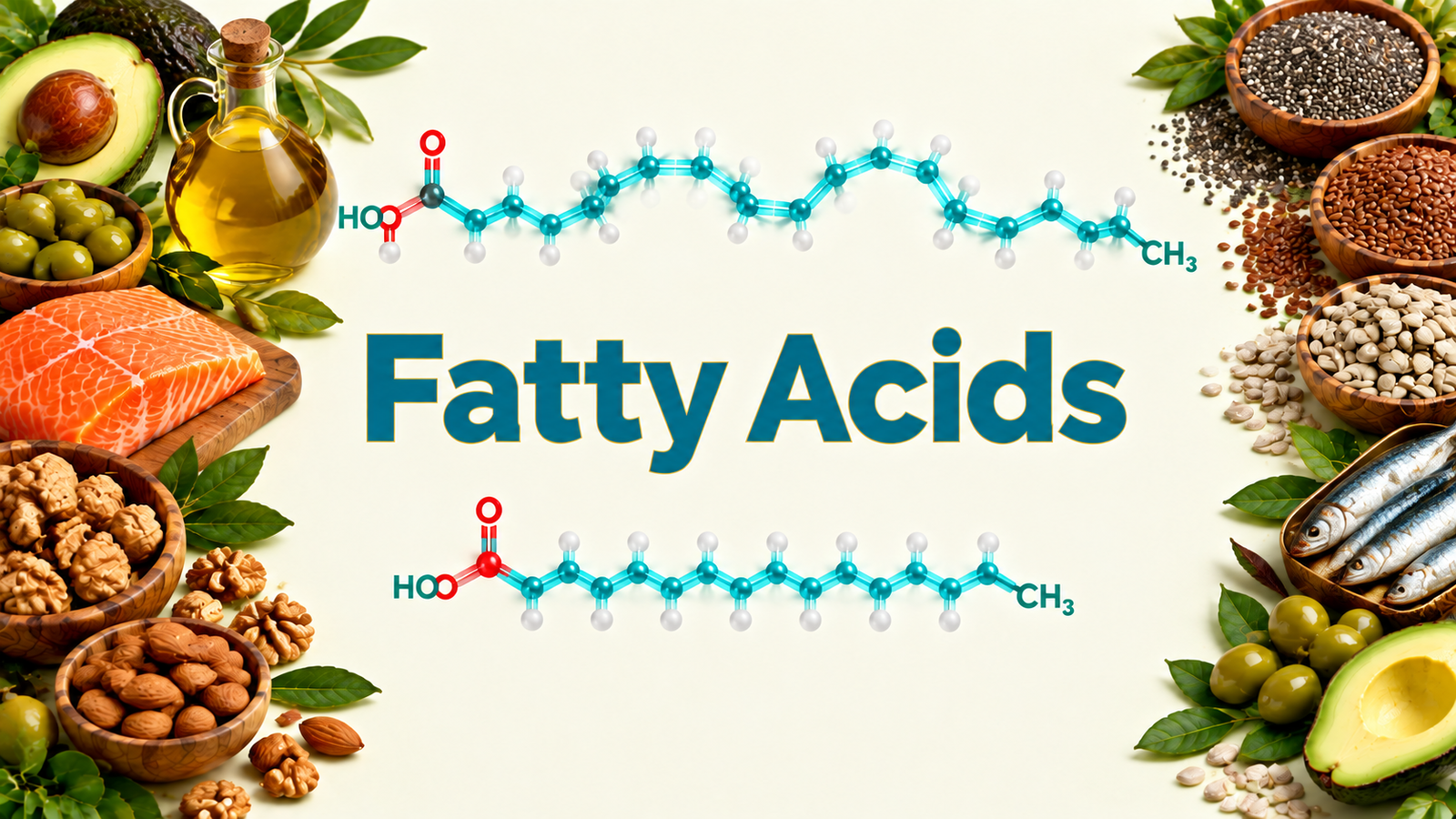
Fatty acids are the building blocks of fats. They differ in length and in how many double bonds they have, and these differences decide how they behave in the body: some raise LDL cholesterol, some lower it, and two are essential because the body cannot make them.
What is it?
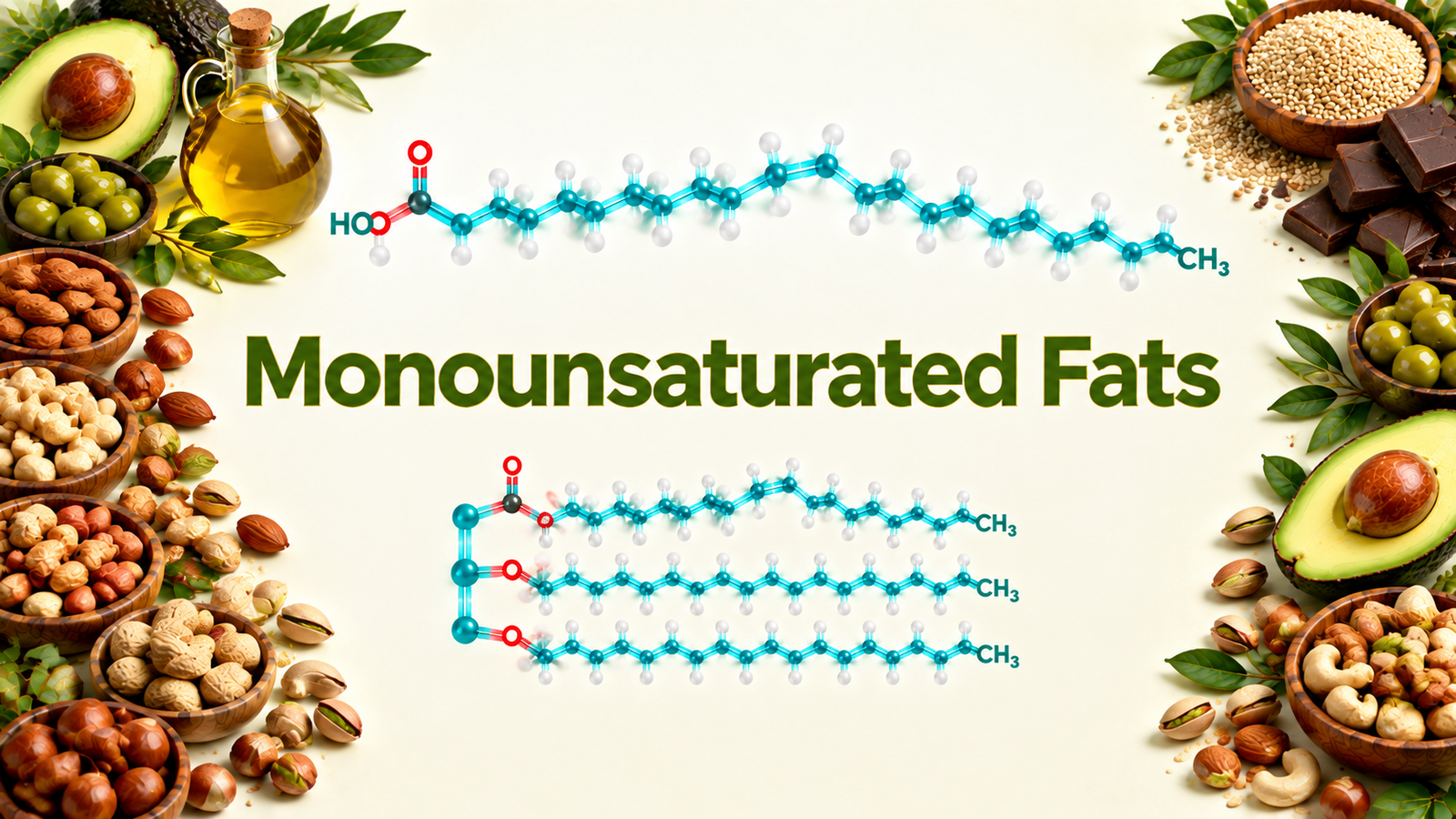
Fatty acids are chains of carbon atoms. In saturated fatty acids the chain has no double bonds; monounsaturated fatty acids have one; polyunsaturated fatty acids have two or more. Trans fatty acids are unsaturated fats with a particular double-bond shape. Foods contain mixtures: for example, olive oil is mostly monounsaturated and butter mostly saturated.
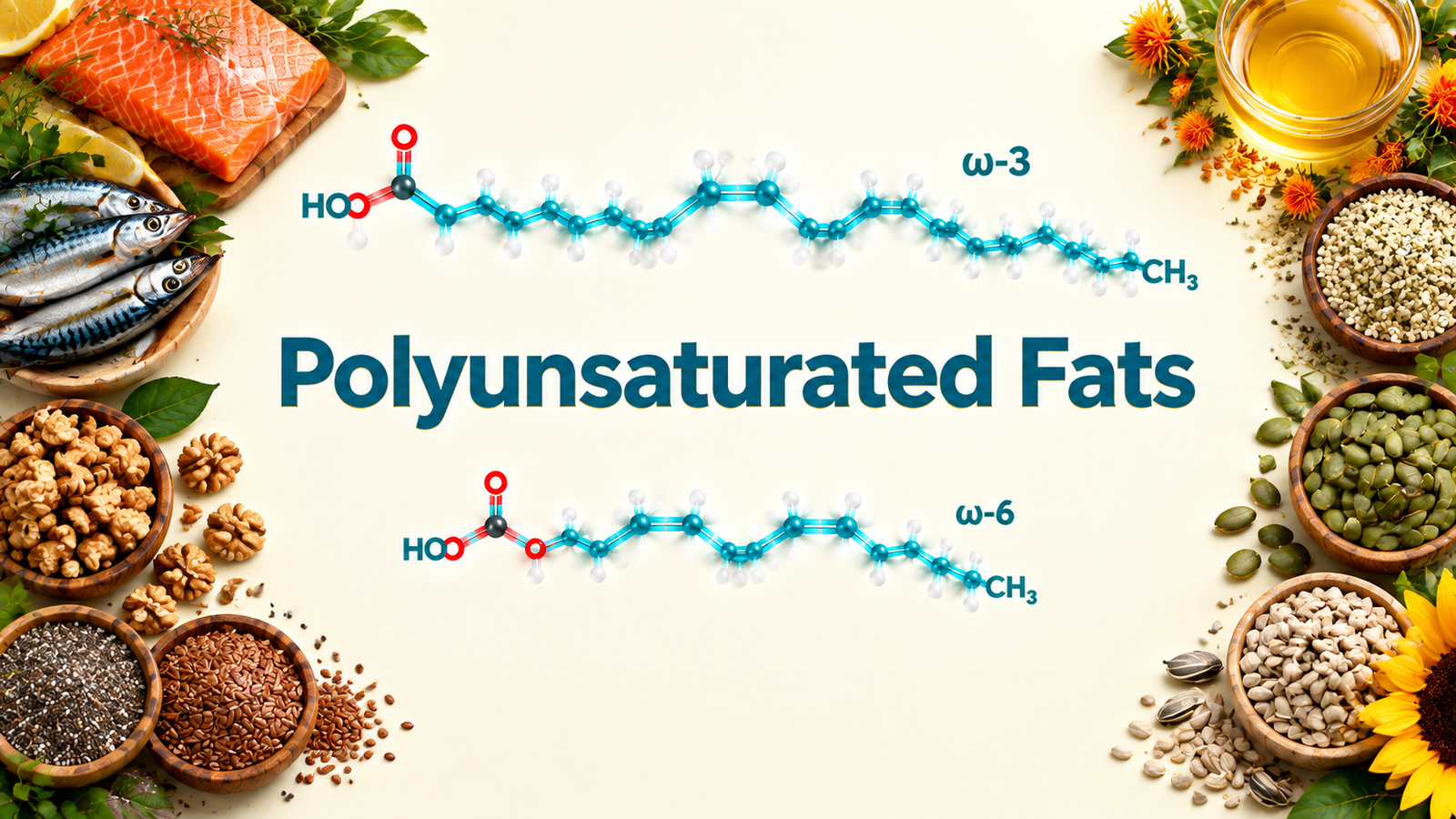
Two polyunsaturated fatty acids are essential: linoleic acid (omega-6) and alpha-linolenic acid (omega-3). The body also needs the long-chain omega-3 fats EPA and DHA, which it can make only in small amounts from alpha-linolenic acid.
What it does
- Provide energy and build cell membranes
- Essential fatty acids are needed for brain development, skin and inflammation control
- Are converted into signalling molecules that affect blood clotting, inflammation and blood vessel tone
- Different types change blood cholesterol levels
Food sources
Saturated: butter, ghee, cream, cheese, fatty meats, coconut and palm oil. Monounsaturated: olive, canola and peanut oil, avocado, nuts. Polyunsaturated: sunflower, soybean and corn oil, nuts, seeds and fish, which are especially rich in omega-3. Trans: processed foods made with partially hydrogenated oil, and small amounts in dairy and meat.
Singapore food examples
- Oily fish — salmon, mackerel, sardines, ikan bilis — for omega-3
- Nuts and seeds — walnuts, almonds, peanuts, flaxseed, chia
- Olive, canola, sunflower and peanut oil for cooking, in small amounts
- Coconut milk, ghee, butter, palm oil and fatty meat — contain more saturated fat
- Check labels for trans fat; Singapore has banned partially hydrogenated oils in food since 2021
How much do I need?
Singapore's dietary guidelines recommend limiting saturated fat to less than 10 percent of daily energy — see Singapore's dietary guidelines for adults (HealthHub). Singapore's RDA table does not list fatty acids.
The US National Academies set Adequate Intakes of 17 g (men) and 12 g (women) of linoleic acid and 1.6 g (men) and 1.1 g (women) of alpha-linolenic acid a day for adults aged 19 to 50.
Low intake and deficiency
Shortfall of the essential fatty acids is rare, but can cause dry, scaly skin and a rash, poor growth in infants and slow wound healing. Many people eat less omega-3 than recommended, especially if they eat little fish.
Too much and safety
A diet high in saturated and trans fat raises LDL cholesterol and the risk of heart disease. Replacing saturated fat with unsaturated fat (rather than with refined carbohydrate) lowers LDL. Very high omega-6 intake from processed foods is a topic of debate; for most people, replacing saturated fat with omega-6 oils is beneficial, but balance with omega-3 matters.
Absorption and bioavailability
Fatty acids are absorbed in the small intestine after digestion. Short and medium-chain fatty acids are absorbed directly into the blood and used quickly, while long-chain ones are carried in lymph and lipoproteins. Polyunsaturated fats are easily damaged by heat, light and air — store oils sealed in a cool, dark place and avoid reusing frying oil many times.
Connection to daily life
- Heart health: the mix of fatty acids shapes cholesterol and triglycerides
- Brain and mood: DHA is a major structural fat in the brain
- Healthy ageing: eating fish twice a week and using unsaturated oils is a widely recommended pattern
- Exercise: fat fuels long, steady exercise — see Exercise
Sources: 1. National Academies of Sciences, Engineering, and Medicine — Dietary Reference Intakes for Energy, Carbohydrate, Fiber, Fat, Fatty Acids, Cholesterol, Protein, and Amino Acids (2005) 2. HealthHub Singapore — Recommended Dietary Allowances: https://www.healthhub.sg/well-being-and-lifestyle/food-diet-and-nutrition/recommended_dietary_allowances 3. HealthHub Singapore — Dietary guidelines for adults: https://www.healthhub.sg/well-being-and-lifestyle/food-diet-and-nutrition/dietary_guidelines_adults 4. Health Promotion Board — Singapore Food Insights Database (SG FoodID): https://www.hpb.gov.sg/healthy-living/food-and-beverage/sgfoodid/ 5. FAO/INFOODS — Food composition tables and databases: https://www.fao.org/food-composition/tables-and-databases/en/

Comments
No comments yet.
Log in to leave a comment.