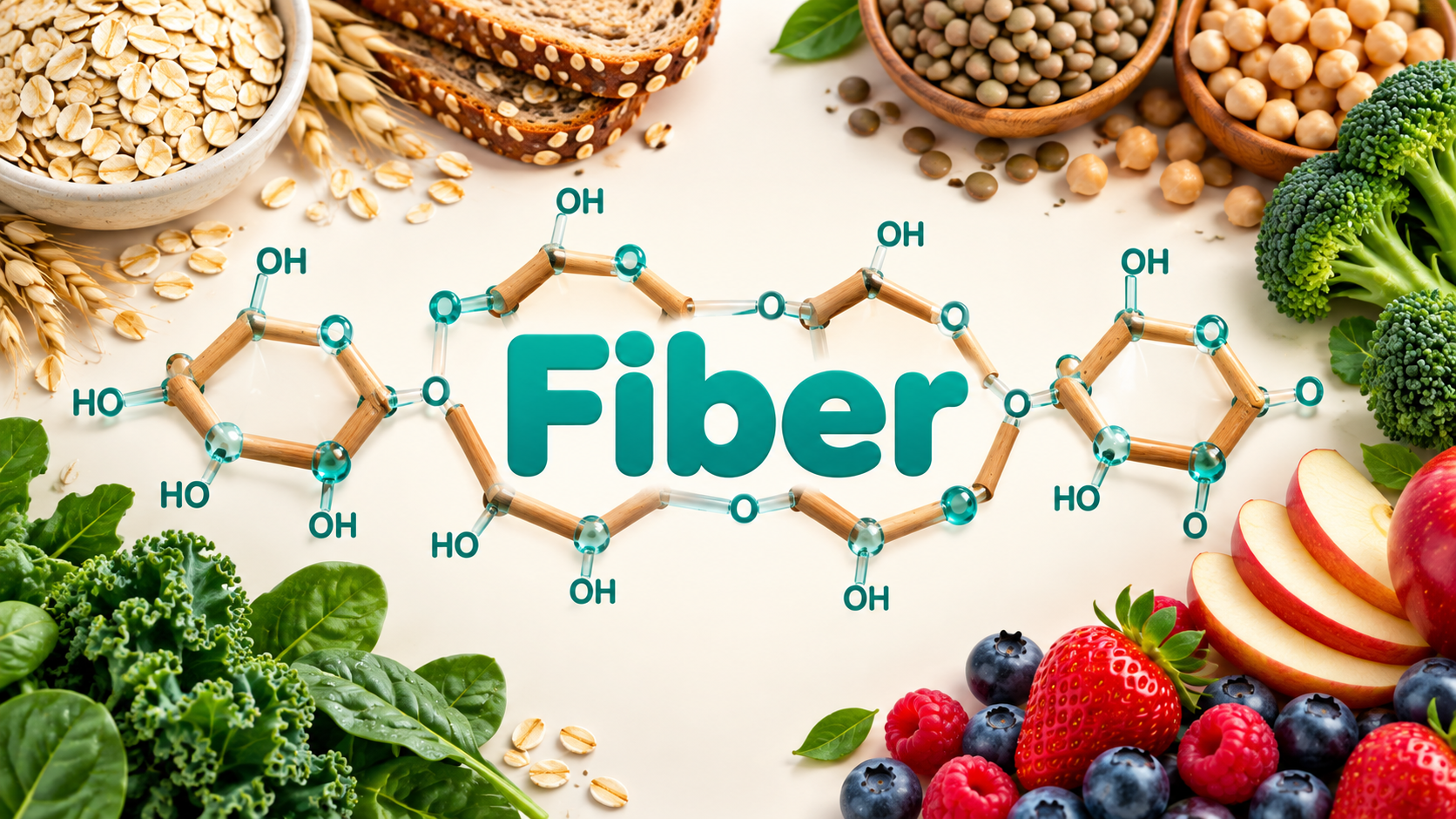
Dietary fibre is the part of plant food the body can't fully digest. It adds bulk that supports regular digestion, feeds beneficial gut bacteria, and can help slow the absorption of sugar into the bloodstream. It's found in fruits, vegetables, whole grains and legumes.
What is it?
Fibre is a type of carbohydrate that passes through the small intestine undigested. It is often grouped by how it behaves: soluble fibre dissolves in water and forms a gel (oats, beans, apples, citrus); insoluble fibre adds bulk (wheat bran, vegetable skins); fermentable fibre is used by gut bacteria, producing short-chain fatty acids that nourish the gut lining (inulin, some plant fibres); and resistant starch resists digestion in the small intestine and is fermented in the colon (cooled rice and potatoes, green banana, legumes).
What it does
- Keeps bowel movements regular and softer
- Feeds beneficial gut bacteria
- Slows sugar absorption and helps blood glucose control
- Helps lower LDL ("bad") cholesterol, especially soluble fibre
- Helps you feel full, which supports weight management
Food sources
Legumes (beans, lentils, chickpeas), oats, wholegrain bread, brown rice, nuts and seeds (chia, flax), fruit with skin, berries, pears, apples and vegetables. Refined grains such as white rice and white bread have had most of their fibre removed.
Singapore food examples
- Brown rice, mixed-grain rice, oats and wholemeal bread
- Dhal, chickpeas, kidney beans and edamame
- Fruit with the skin on — apple, pear, guava — and papaya
- Vegetables — kai lan, chye sim, okra, cabbage, broccoli
- Chia seeds, flaxseed and nuts
- Wholegrain noodles and wholemeal roti prata or chapati
How much do I need?
Singapore's RDA table does not list fibre, but its guidelines encourage at least two servings each of fruit and vegetables a day, and at least half of grains from wholegrain — see Singapore's dietary guidelines for adults (HealthHub).
US and Canadian guidance sets an Adequate Intake of 14 g of fibre per 1,000 kilocalories, about 25 g a day for women and 38 g for men aged 19 to 50 (21 g and 30 g after 50). Many adults eat less than this.
Low intake and deficiency
Low-fibre diets are linked to constipation, haemorrhoids, diverticular disease and a higher risk of heart disease, type 2 diabetes and bowel cancer. Constipation is the most obvious sign, along with feeling hungry soon after meals.
Too much and safety
Fibre from food is safe. Increasing it too quickly causes bloating, gas, cramps and loose stools; raise intake gradually over a few weeks and drink enough fluid. Very high intakes can slightly reduce absorption of iron, zinc and calcium, and can interfere with the timing of some medicines — take medicines at a different time from fibre supplements.
People with some bowel conditions (strictures, active inflammatory bowel disease) may be advised to limit certain fibres. Ask your doctor.
Absorption and bioavailability
Fibre is not absorbed. Bacteria in the colon ferment some of it, making short-chain fatty acids such as butyrate that the gut lining uses as fuel and that may protect against inflammation and bowel cancer.
Cooking and cooling starchy foods such as rice and potatoes increases their resistant starch, and soaking and cooking legumes make them easier to digest.
Connection to daily life
- Gut health: feeds the microbiome and keeps digestion regular
- Heart health and blood sugar: soluble fibre helps lower cholesterol and flatten blood sugar peaks
- Healthy weight: high-fibre foods are filling
- Healthy ageing: protects against constipation and bowel cancer
- Exercise: eat fibre-rich foods well before hard training if your gut is sensitive — see Exercise
Sources: 1. National Academies of Sciences, Engineering, and Medicine — Dietary Reference Intakes for Energy, Carbohydrate, Fiber, Fat, Fatty Acids, Cholesterol, Protein, and Amino Acids (2005) 2. HealthHub Singapore — Recommended Dietary Allowances: https://www.healthhub.sg/well-being-and-lifestyle/food-diet-and-nutrition/recommended_dietary_allowances 3. HealthHub Singapore — Dietary guidelines for adults: https://www.healthhub.sg/well-being-and-lifestyle/food-diet-and-nutrition/dietary_guidelines_adults 4. Health Promotion Board — Singapore Food Insights Database (SG FoodID): https://www.hpb.gov.sg/healthy-living/food-and-beverage/sgfoodid/ 5. FAO/INFOODS — Food composition tables and databases: https://www.fao.org/food-composition/tables-and-databases/en/
Comments
No comments yet.
Log in to leave a comment.