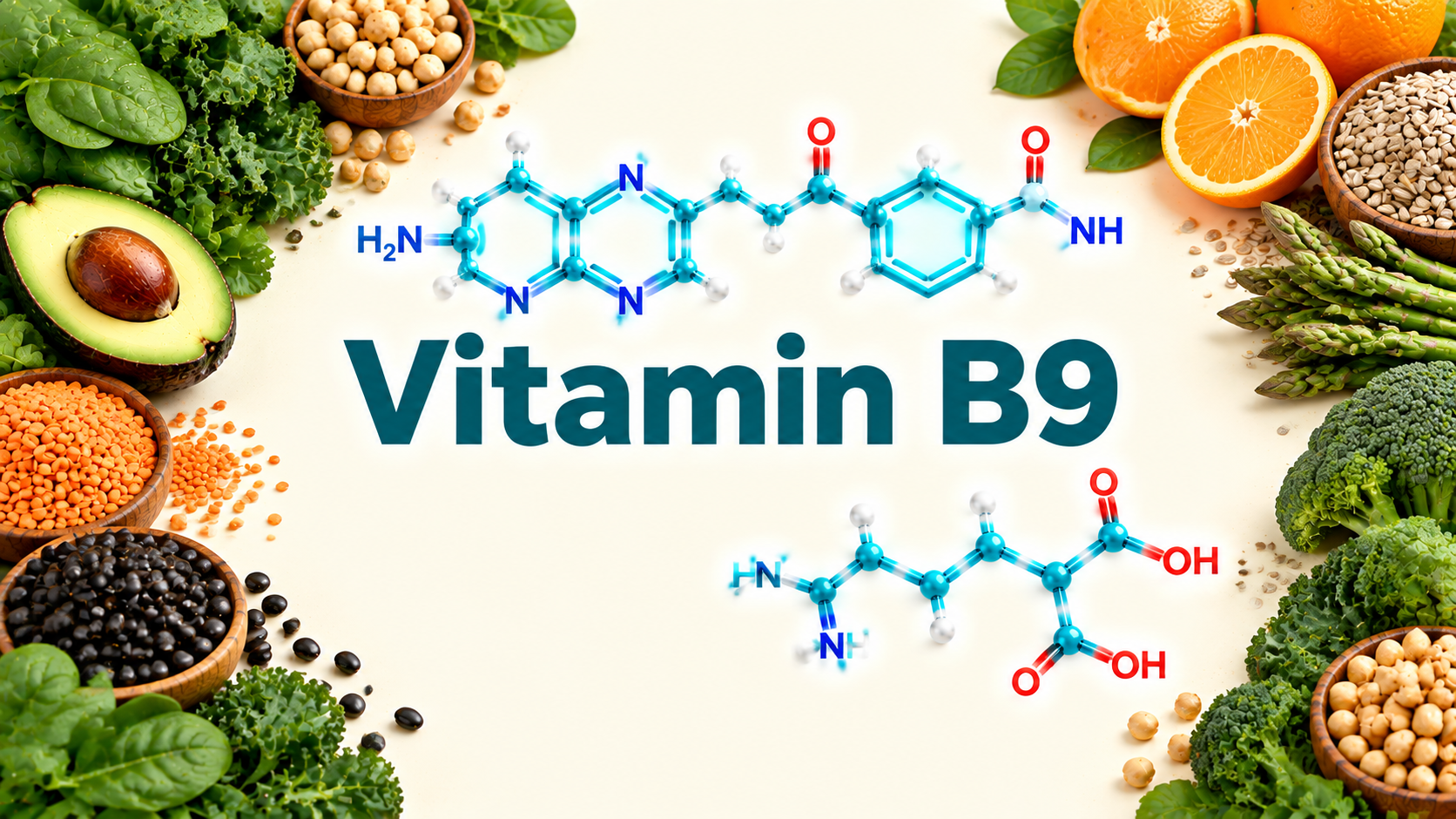
Folate (vitamin B9) is needed to make DNA and new cells, including red blood cells. It is especially important before and during early pregnancy, when it helps prevent neural tube defects in the baby. Folate occurs naturally in leafy greens and legumes; folic acid is the form used in supplements and fortified foods.
What is it?
Folate is the general name for a group of B vitamins. "Folate" usually refers to the forms found naturally in food, while folic acid is the synthetic form used in supplements and fortified foods. In the body, both are converted into the active form, tetrahydrofolate, which carries single-carbon units used to build DNA and amino acids.
What it does
- Is needed to make DNA and RNA, so every new cell depends on it
- Works with vitamin B12 to make red blood cells
- Helps prevent neural tube defects (such as spina bifida) when taken before and during early pregnancy
- Helps convert homocysteine to methionine, an amino acid used in many reactions
Food sources
Dark-green leafy vegetables (spinach, kai lan, kang kong), asparagus, Brussels sprouts, legumes (lentils, chickpeas, beans), liver, oranges and other citrus, nuts and seeds, and grains are good sources. Fortified cereals and some breads contain folic acid.
Singapore food examples
- Kai lan, chye sim, spinach and kang kong, steamed or lightly stir-fried
- Dhal, chickpeas, red kidney beans and edamame
- Orange, pomelo and other citrus fruit
- Asparagus, broccoli and okra
- Wholegrain bread, oats and brown rice
- Peanuts and sunflower seeds
- Fortified cereals — check the label
How much do I need?
Singapore's RDA for folic acid is 400 micrograms a day for adults of all ages, rising to 600 micrograms in pregnancy and 500 micrograms while breastfeeding. Children need less (for example 200 micrograms at ages 3 to 6, 300 micrograms at ages 7 to 12). See Singapore's age- and sex-specific Recommended Dietary Allowances (HealthHub) for the full tables.
Health guidance for women planning pregnancy is to take 400 micrograms of folic acid daily, starting at least a month before conception and continuing through the first three months. Talk to your doctor, since some women need a higher dose.
Low intake and deficiency
Low folate causes megaloblastic anaemia — large, immature red blood cells — which leads to tiredness, weakness, pale skin, breathlessness, a sore tongue and mouth ulcers. In pregnancy, low folate raises the risk of neural tube defects, and also of premature birth and low birth weight.
Higher risk groups include women who are or could become pregnant, people with heavy alcohol use, people with malabsorption conditions (such as coeliac disease), and people on certain medicines, including methotrexate and some anti-seizure drugs.
Too much and safety
Natural food folate has not been linked to harm. The upper limit applies to folic acid from supplements and fortified foods: 1,000 micrograms a day for adults.
Large amounts of folic acid can hide the anaemia caused by vitamin B12 deficiency while the nerve damage of that deficiency continues, which is a particular concern for older adults. Anyone taking more than 400 micrograms of folic acid should have their B12 status considered.
Absorption and bioavailability
Folic acid taken with food is absorbed far better (about 85 percent) than the natural folate in food (about 50 percent). That is why nutrition labels and guidelines use "dietary folate equivalents" (DFE): 1 microgram of food folate equals 0.6 micrograms of folic acid taken with food.
Folate is easily destroyed by heat and light and dissolves in water. Eat leafy greens raw or lightly steamed, avoid long boiling, and use the cooking liquid in soups where possible.
Connection to daily life
- Pregnancy: one of the best-evidenced reasons to take a supplement before conception
- Heart health: works with vitamin B6 and vitamin B12 to keep homocysteine in check
- Blood health and energy: low folate causes tiredness that can affect exercise and daily life — see Exercise
- Alcohol: regular drinking lowers folate status and absorption
Sources: 1. NIH Office of Dietary Supplements — Folate Fact Sheet for Health Professionals: https://ods.od.nih.gov/factsheets/Folate-HealthProfessional/ 2. HealthHub Singapore — Recommended Dietary Allowances: https://www.healthhub.sg/well-being-and-lifestyle/food-diet-and-nutrition/recommended_dietary_allowances 3. Health Promotion Board — Singapore Food Insights Database (SG FoodID): https://www.hpb.gov.sg/healthy-living/food-and-beverage/sgfoodid/ 4. FAO/INFOODS — Food composition tables and databases: https://www.fao.org/food-composition/tables-and-databases/en/ 5. NIH Office of Dietary Supplements — all fact sheets: https://ods.od.nih.gov/factsheets/list-all/
Comments
No comments yet.
Log in to leave a comment.