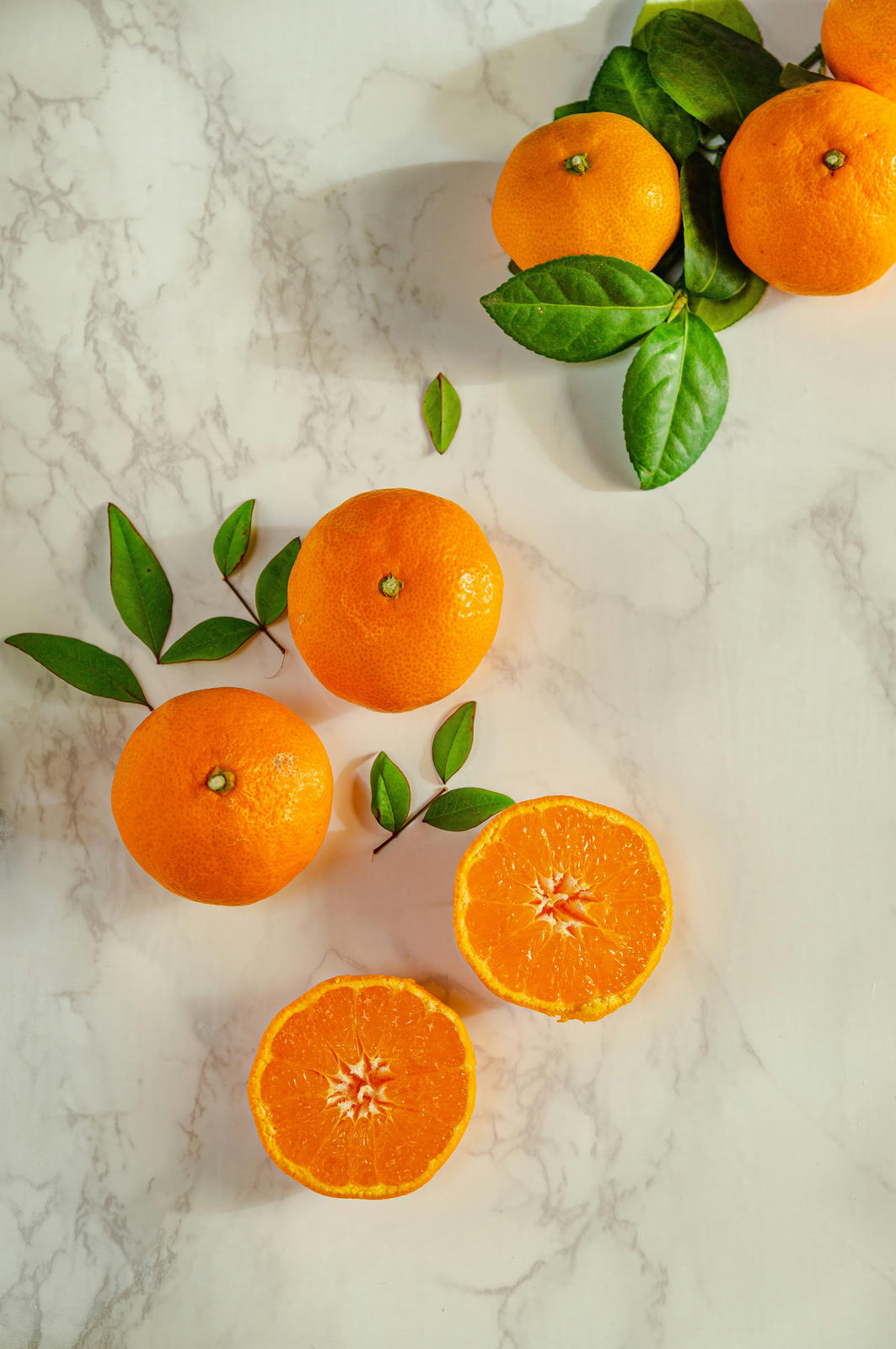
Name: Clementine (Citrus × clementina), a tangor — a hybrid of the Mediterranean willowleaf mandarin and the sweet orange. Every clementine sold in shops is this same hybrid; names such as Fina, Oroval, Clemenules and Nules refer to specific commercial cultivars and harvest seasons, not different fruits. Clementines are closely related to, but distinct from, satsumas and tangerines, both described on their own pages — all three are loose-skinned mandarin-type citrus, but only the clementine carries sweet-orange parentage.
Description
The clementine arose in the late 19th century in the garden of an orphanage in Misserghin, Algeria, where the French missionary brother Marie-Clément Rodier grafted cuttings from an unusual seedling growing among the orchard's mandarin trees. The fruit was formally named after him in 1902. Some early accounts pointed to an older origin in southern China, but genomic analysis has since confirmed the Algerian cross between willowleaf mandarin and sweet orange.
Clementines became a major commercial crop through the 20th century, prized for having few or no seeds, a loose, easy-to-peel skin, and a sweeter, less acidic flavour than most other mandarins. They are now grown widely around the Mediterranean, in North Africa, Spain, and parts of the United States, and are especially associated with the winter holiday season, often sold in small crates.
Main nutrition value
Show all nutrients
Per 100g of raw clementine, USDA data lists approximately 47 kcal, 12g carbohydrate, 9.2g naturally occurring sugars, 1.7g dietary fibre, and under 1g each of protein and fat. Clementines are particularly valued for vitamin C, at close to half a day's value per 100g, and also supply a useful amount of potassium and folate.
How best to be consumed
Clementines are meant to be peeled by hand and eaten whole, segment by segment — no cutting board required, which is part of their appeal.
- Peel and eat fresh as a quick, no-prep snack — the skin comes away easily and the flesh is usually seedless.
- Add segments to green salads, yoghurt, or a fruit bowl for a naturally sweet contrast.
- Pair with a source of protein or fat, such as nuts or plain yoghurt, to make the snack more filling.
- Use the zest sparingly in baking or dressings; wash the fruit well first if using unwaxed peel.
- Favour the whole fruit over juice, since juicing strips out the fibre that helps slow sugar absorption.
Overconsumption could cause…
Clementines are safe for most people in ordinary amounts, but their small size makes it easy to eat several in one sitting, more so than with a single larger orange.
- Higher sugar intake than intended — it's easy to eat the equivalent of three or four servings of fruit without noticing, since each piece is small.
- Digestive discomfort, such as bloating, if several are eaten quickly on an otherwise light stomach.
- Tooth enamel exposure with very frequent intake, given the fruit's natural acidity.
- No unusual medication-interaction risk, unlike grapefruit and its closer relatives.
U.S. Department of Agriculture, FoodData Central — Clementines, raw (100g portion): https://fdc.nal.usda.gov/food-details/168195/nutrients Wikipedia — Clementine, used for cultivar and naming background: https://en.wikipedia.org/wiki/Clementine
Comments
No comments yet.
Log in to leave a comment.