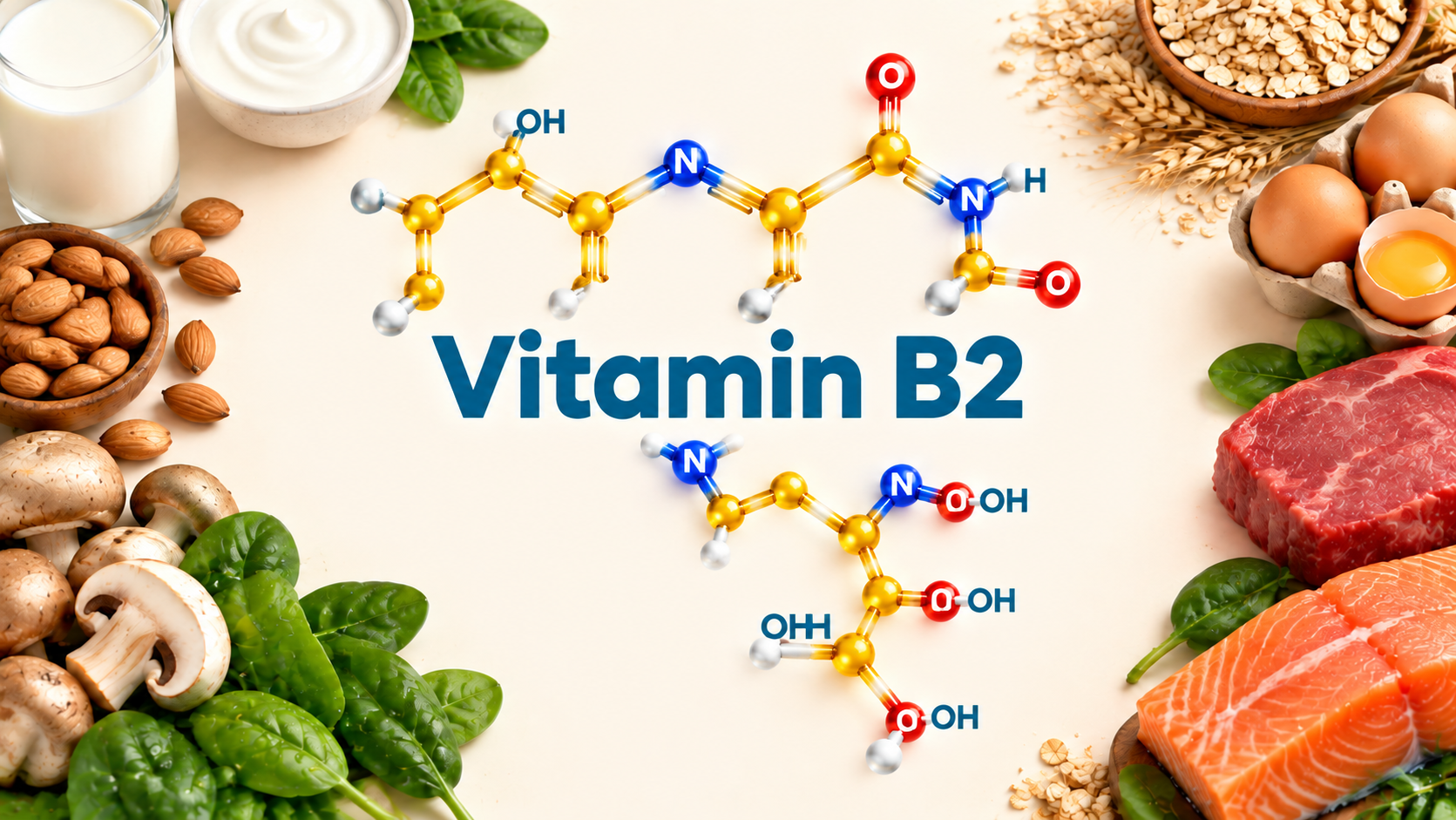
Riboflavin (vitamin B2) helps the body release energy from food and supports healthy skin, eyes and the lining of the mouth and gut. Milk, eggs, lean meat, mushrooms and fortified cereals are the main sources.
What is it?
Riboflavin is a water-soluble, yellow-green pigment — it is what turns urine bright yellow after a supplement or vitamin drink. In the body it forms two coenzymes (FAD and FMN) that take part in energy production and in handling other nutrients, including iron and other B vitamins.
What it does
- Helps release energy from carbohydrate, fat and protein
- Supports healthy skin, eyes and the linings of the mouth and digestive tract
- Helps the body use other B vitamins (B6, folate and niacin) and iron normally
- Acts as part of the body's antioxidant defences
Food sources
Milk, yoghurt and cheese, eggs, lean meat and organ meats such as liver, mushrooms, almonds and fortified breakfast cereals are the richest sources. Green leafy vegetables and enriched grains add smaller but useful amounts.
Singapore food examples
- Milk, soy milk (check it is fortified), yoghurt and cheese
- Eggs — soft-boiled with toast, in congee or as omelette
- Chicken, lean beef and pork in everyday meals
- Shiitake, button and enoki mushrooms in soups and stir-fries
- Almonds and other nuts as snacks
- Fortified cereals and malted drinks — check the label
How much do I need?
Singapore's adult RDA for riboflavin varies with age and sex: about 1.77 mg a day for men aged 18 to under 30, 1.74 mg for men 30 to under 60 and 1.47 mg for men 60 and over; about 1.26, 1.29 and 1.20 mg for women in the same age bands. Pregnancy and breastfeeding add more. See Singapore's age- and sex-specific Recommended Dietary Allowances (HealthHub) for the full tables.
Low intake and deficiency
Deficiency (ariboflavinosis) is uncommon where dairy, eggs and meat are eaten. Signs include a sore throat, cracks at the corners of the mouth, cracked or swollen lips, a swollen magenta-coloured tongue, skin inflammation and, over time, a type of anaemia.
People at higher risk include those who avoid dairy, eggs and meat without eating fortified foods, people with heavy alcohol use, pregnant and breastfeeding women, and some older adults.
Too much and safety
No upper limit has been set. Excess riboflavin is not absorbed or is passed in urine, which turns bright yellow — harmless. Very high doses have been studied for migraine prevention, but that should only be tried with medical guidance.
Absorption and bioavailability
Riboflavin is stable to heat but is destroyed by light, so milk sold in clear containers loses riboflavin when left in bright light — store milk in opaque cartons and keep it in the fridge. Some is lost into cooking water, so soups and steaming help retain it.
Riboflavin in food is bound to protein and released by stomach acid and digestion, and absorption is helped when it is eaten with a meal.
Connection to daily life
- Energy and exercise: involved in producing the energy used in training — see Exercise
- Skin and mouth health: cracked lips or mouth corners can be an early sign of low B-vitamin intake
- Vegetarian and vegan diets: dairy and eggs are major sources, so plant-based eaters should include fortified foods, mushrooms and almonds
- Pairs with Vitamin B6 and folate, which depend on riboflavin to be activated
Sources: 1. NIH Office of Dietary Supplements — Riboflavin Fact Sheet for Health Professionals: https://ods.od.nih.gov/factsheets/Riboflavin-HealthProfessional/ 2. HealthHub Singapore — Recommended Dietary Allowances: https://www.healthhub.sg/well-being-and-lifestyle/food-diet-and-nutrition/recommended_dietary_allowances 3. Health Promotion Board — Singapore Food Insights Database (SG FoodID): https://www.hpb.gov.sg/healthy-living/food-and-beverage/sgfoodid/ 4. FAO/INFOODS — Food composition tables and databases: https://www.fao.org/food-composition/tables-and-databases/en/ 5. NIH Office of Dietary Supplements — all fact sheets: https://ods.od.nih.gov/factsheets/list-all/
Comments
No comments yet.
Log in to leave a comment.