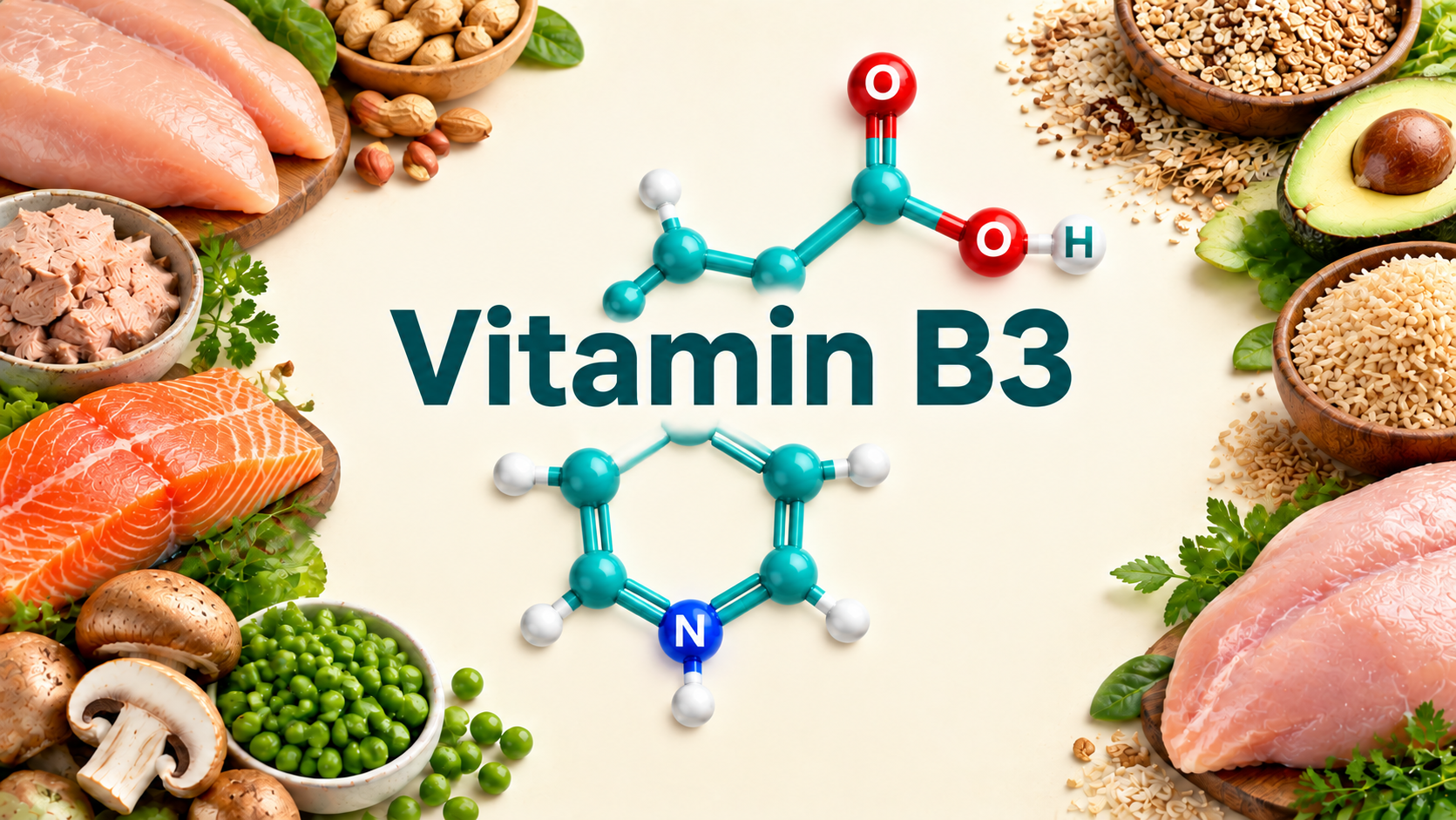
Niacin (vitamin B3) is used in hundreds of reactions that turn food into energy and repair cells. Chicken, fish, meat, peanuts and mushrooms are rich sources, and the body can also make some niacin from the amino acid tryptophan.
What is it?
Niacin is the collective name for nicotinic acid and nicotinamide (niacinamide). Inside cells they become NAD and NADP, two of the most widely used coenzymes in the body.
Niacin intake is measured in niacin equivalents (NE): 1 NE is 1 mg of available niacin or about 60 mg of the amino acid tryptophan, which the body can convert to niacin. Protein-rich foods therefore contribute even when they contain little niacin itself.
What it does
- Helps turn carbohydrate, fat and protein into energy
- Supports healthy skin and a normal nervous system
- Helps the digestive system work normally
- Is needed to make and repair DNA
Food sources
Good sources include chicken and turkey breast, fish such as tuna and salmon, beef, pork, peanuts, mushrooms, brown rice and fortified breakfast cereals. Legumes and wholegrains add smaller amounts.
Singapore food examples
- Chicken rice, grilled or steamed chicken breast
- Tuna, mackerel, salmon and sliced fish soup
- Peanuts, kacang puteh and peanut-based sauces in moderation
- Mushrooms — shiitake, portobello and button
- Brown rice and wholegrain noodles
- Beef and pork in soups and stir-fries
How much do I need?
Singapore sets niacin RDAs in niacin equivalents, by age and sex: about 19.5 mg NE a day for men aged 18 to under 30, 19.1 mg for men 30 to under 60 and 16.2 mg for men 60 and over; about 13.9, 14.2 and 13.2 mg NE for women in the same age bands. Pregnancy and breastfeeding add more. See Singapore's age- and sex-specific Recommended Dietary Allowances (HealthHub) for the full tables.
Low intake and deficiency
Severe niacin deficiency causes pellagra, classically described by the "three Ds": dermatitis (a rough skin rash in sun-exposed areas), diarrhoea and dementia (confusion), and, if untreated, can be fatal. It is rare in Singapore.
Risk is higher with long-term heavy alcohol use, conditions that reduce nutrient absorption, and very limited diets that lack both niacin and protein.
Too much and safety
Niacin from food is not a concern. The tolerable upper limit for adults is 35 mg a day, but it applies only to niacin from supplements and fortified foods.
Nicotinic acid supplements can cause a hot, red, itchy "flush" of the face and chest, usually from about 30 to 50 mg, along with nausea. Very high doses (grams per day, used under medical supervision for blood fats) can damage the liver and affect blood sugar. Nicotinamide does not cause flushing. Do not take high-dose niacin without medical advice.
Absorption and bioavailability
Niacin from meat, fish and eggs is well absorbed. In cereals such as maize, much of it is bound in a form that is poorly available unless the grain is treated with alkali, as in traditional tortilla making.
Your body converts tryptophan to niacin, but only with enough protein, iron, riboflavin and vitamin B6 — another reason a balanced diet matters.
Connection to daily life
- Energy and exercise: part of the machinery that fuels activity — see Exercise
- Skin health: pellagra shows how niacin supports the skin
- Alcohol: heavy drinking is a major risk factor for low niacin
- Heart health: prescription-dose niacin has been used to treat blood fats, but that is a medical treatment, not something to self-prescribe
Sources: 1. NIH Office of Dietary Supplements — Niacin Fact Sheet for Health Professionals: https://ods.od.nih.gov/factsheets/Niacin-HealthProfessional/ 2. HealthHub Singapore — Recommended Dietary Allowances: https://www.healthhub.sg/well-being-and-lifestyle/food-diet-and-nutrition/recommended_dietary_allowances 3. Health Promotion Board — Singapore Food Insights Database (SG FoodID): https://www.hpb.gov.sg/healthy-living/food-and-beverage/sgfoodid/ 4. FAO/INFOODS — Food composition tables and databases: https://www.fao.org/food-composition/tables-and-databases/en/ 5. NIH Office of Dietary Supplements — all fact sheets: https://ods.od.nih.gov/factsheets/list-all/
Comments
No comments yet.
Log in to leave a comment.