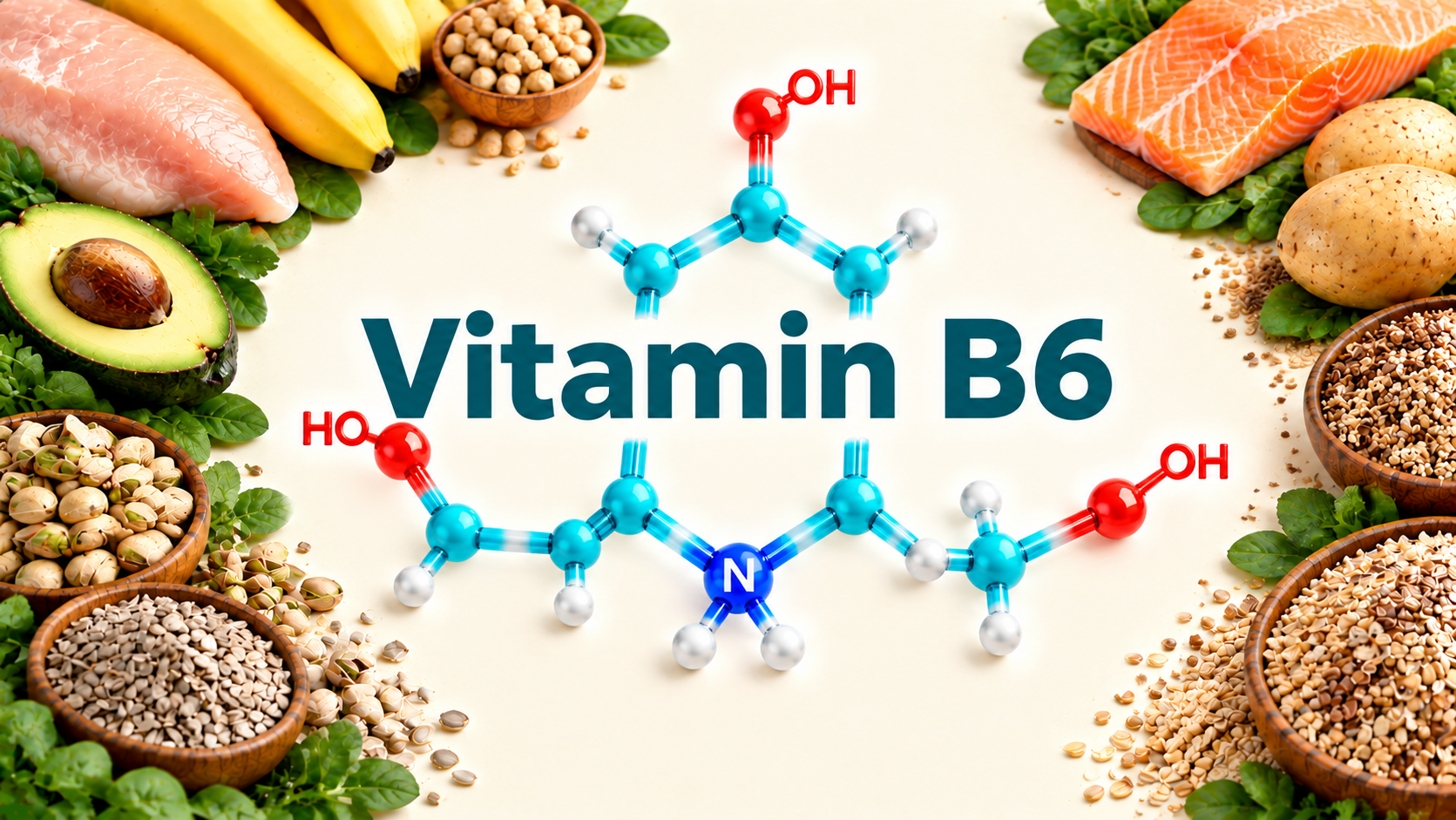
Vitamin B6 helps the body use protein, make red blood cells and produce brain chemicals that influence mood and sleep. It is found in fish, poultry, chickpeas, potatoes and bananas, and it is one of the few B vitamins that causes harm at very high supplement doses.
What is it?
Vitamin B6 is a group of related compounds — pyridoxine, pyridoxal and pyridoxamine — that the body converts into the active form pyridoxal 5'-phosphate (PLP). PLP acts as a helper (coenzyme) in more than 100 enzyme reactions, most of them involving amino acids and protein.
What it does
- Helps the body break down and use protein
- Is needed to make haemoglobin, the oxygen-carrying part of red blood cells
- Helps produce neurotransmitters such as serotonin and dopamine
- Supports normal immune function
- Helps regulate blood glucose release from stored glycogen
Food sources
Chickpeas, tuna, salmon, chicken and turkey, beef liver, potatoes and other starchy vegetables, bananas and fortified cereals are among the richest sources. Most fish, meat, legumes, vegetables and fruit contribute some.
Singapore food examples
- Sliced fish soup, steamed fish and grilled tuna or salmon
- Chicken rice and other chicken dishes
- Chickpeas (kacang puteh) in curries and salads, and dhal
- Potato, sweet potato and other starchy vegetables
- Bananas, especially pisang raja or Cavendish
- Fortified cereals — check the label
How much do I need?
Singapore's adult RDA for vitamin B6 is 1.3 mg a day for men and women aged 19 to 50. It rises after 50: 1.7 mg for men and 1.5 mg for women. Pregnancy needs 1.9 mg and breastfeeding 2.0 mg. See Singapore's age- and sex-specific Recommended Dietary Allowances (HealthHub) for the full tables.
Low intake and deficiency
Isolated vitamin B6 deficiency is uncommon. Signs include an itchy, scaly rash on the face and scalp (seborrhoeic dermatitis), cracked lips, a sore, smooth tongue, anaemia, confusion or depression, a weakened immune system and, in severe cases, seizures or nerve damage.
Higher risk groups include people with kidney disease, malabsorption conditions such as coeliac disease or inflammatory bowel disease, people with alcohol use disorder, older adults, and people taking certain medicines — for example isoniazid used for tuberculosis, which is usually prescribed together with vitamin B6.
Too much and safety
Vitamin B6 from food has not been linked to harm. The tolerable upper limit for adults is 100 mg a day from all sources, based on the risk of nerve damage. Long-term intake of high-dose supplements can cause painful, numb or tingling hands and feet (sensory neuropathy), skin lesions, nausea and sensitivity to sunlight — and some people report symptoms below that level.
Many multivitamins and "energy" or "stress" supplements contain B6, so check labels if you take more than one product. Stop and seek medical advice if you develop numbness or tingling.
Absorption and bioavailability
About 75 percent of vitamin B6 in a mixed diet is absorbed. The form in animal foods is absorbed well, while in plant foods a portion is bound to sugar (glycosylated) and is less available — so the same amount from fish or chicken usually goes further than from plant sources.
B6 is lost during food processing and refining, and some is lost in cooking water. Riboflavin is needed to activate B6 in the body.
Connection to daily life
- Mood and sleep: needed to make serotonin and other brain chemicals involved in mood and sleep — see Sleep and Stress — but extra supplements do not improve sleep or mood in people who are not deficient
- Healthy ageing: needs are higher after 50, and older adults are more likely to fall short
- Heart health: works with folate and vitamin B12 in handling homocysteine
- Exercise: supports the protein metabolism that muscle recovery relies on — see Exercise
Sources: 1. NIH Office of Dietary Supplements — Vitamin B6 Fact Sheet for Health Professionals: https://ods.od.nih.gov/factsheets/VitaminB6-HealthProfessional/ 2. HealthHub Singapore — Recommended Dietary Allowances: https://www.healthhub.sg/well-being-and-lifestyle/food-diet-and-nutrition/recommended_dietary_allowances 3. Health Promotion Board — Singapore Food Insights Database (SG FoodID): https://www.hpb.gov.sg/healthy-living/food-and-beverage/sgfoodid/ 4. FAO/INFOODS — Food composition tables and databases: https://www.fao.org/food-composition/tables-and-databases/en/ 5. NIH Office of Dietary Supplements — all fact sheets: https://ods.od.nih.gov/factsheets/list-all/
Comments
No comments yet.
Log in to leave a comment.