Also known asPummelo · Shaddock · Limau Bali · Citrus maxima · Citrus grandis · 柚
Name: Pomelo, also spelled pummelo (Citrus maxima), and sometimes called shaddock. The species name maxima is Latin for “the biggest,” reflecting its status as the largest citrus fruit.
Description
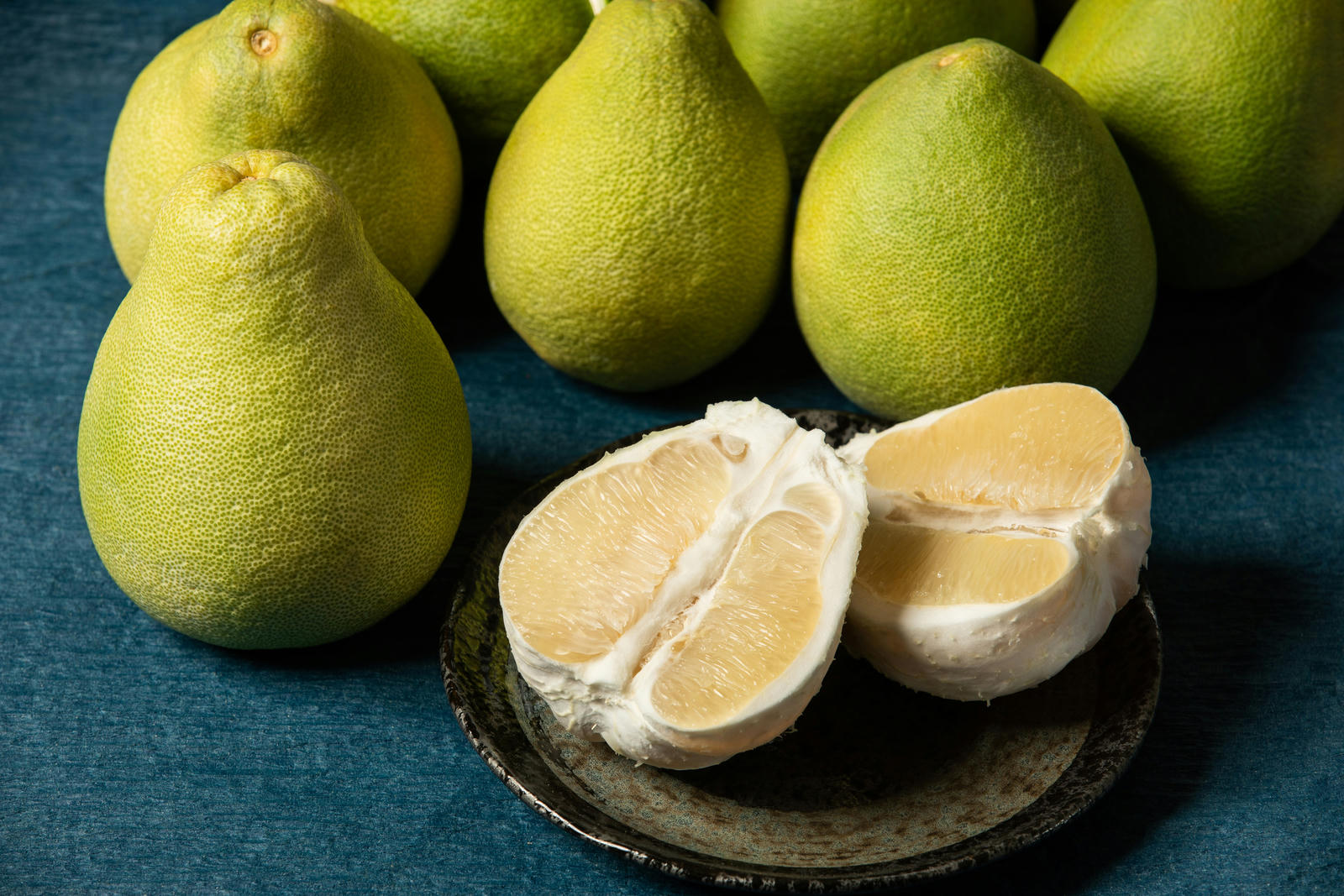
The pomelo is native to Southeast Asia and Malaysia. Unlike most citrus eaten today, it is one of the original, non-hybrid citrus species — an ancestor of the modern grapefruit, which arose from a natural cross between pomelo and sweet orange (roughly 63% of the grapefruit's genome traces back to pomelo). The tree reached China around 100 BCE and is now heavily cultivated in southern China; seeds were carried to the Americas by the late 1600s.
As an ancestor species rather than a hybrid, pomelo has a much thicker rind and pith than most other citrus, and its flesh is drier and firmer than a grapefruit's, with individual juice sacs that separate more easily.
Main nutrition value
Show all nutrients
Per 100g of raw pomelo, USDA data lists approximately 38 kcal, 9.6g carbohydrate, 1g dietary fibre, 0.76g protein and almost no fat. Pomelo stands out for its vitamin C content, higher per 100g than orange or grapefruit, and it also supplies a useful amount of potassium, all for relatively few calories.
How best to be consumed
The thick rind and bitter white pith are removed before eating, which takes more effort than most citrus but is worthwhile for the firm, mildly sweet segments underneath.
- Peel away the thick rind and pith, then separate the segments; the individual juice sacs can also be pulled apart by hand for easier eating.
- Add segments to fresh salads, either fruit-based or alongside savoury ingredients like seafood or herbs, a common pairing in Southeast Asian cooking.
- Use as a lower-sugar, higher-fibre alternative to grapefruit at breakfast.
- Store whole pomelo at room temperature or refrigerated — its thick rind gives it a longer shelf life than most citrus.
- Avoid pairing heavily with medications that carry a grapefruit-juice warning label, given pomelo's shared lineage with grapefruit.
Overconsumption could cause…
Pomelo is lower in sugar than most other citrus, so it carries less of that particular concern, but a few things are worth keeping in mind at high intakes.
- Medication interaction: as the ancestor of the grapefruit, pomelo contains some of the same furanocoumarin compounds that can interfere with how the body processes certain medications, including some statins and blood pressure drugs — check with a pharmacist or doctor if you take a medication with a grapefruit warning.
- Digestive discomfort: a large amount of fibre and citrus acid at once can cause bloating in sensitive people.
- Tooth enamel exposure with very frequent intake, given the fruit's natural acidity.
U.S. Department of Agriculture, FoodData Central — Pummelo, raw (100g portion): https://fdc.nal.usda.gov/food-details/167754/nutrients (USDA catalogues this fruit as "pummelo", an alternate spelling of pomelo) Wikipedia — Pomelo, used for origin and lineage background: https://en.wikipedia.org/wiki/Pomelo
Comments
No comments yet.
Log in to leave a comment.