Also known asFragaria × ananassa · 草莓
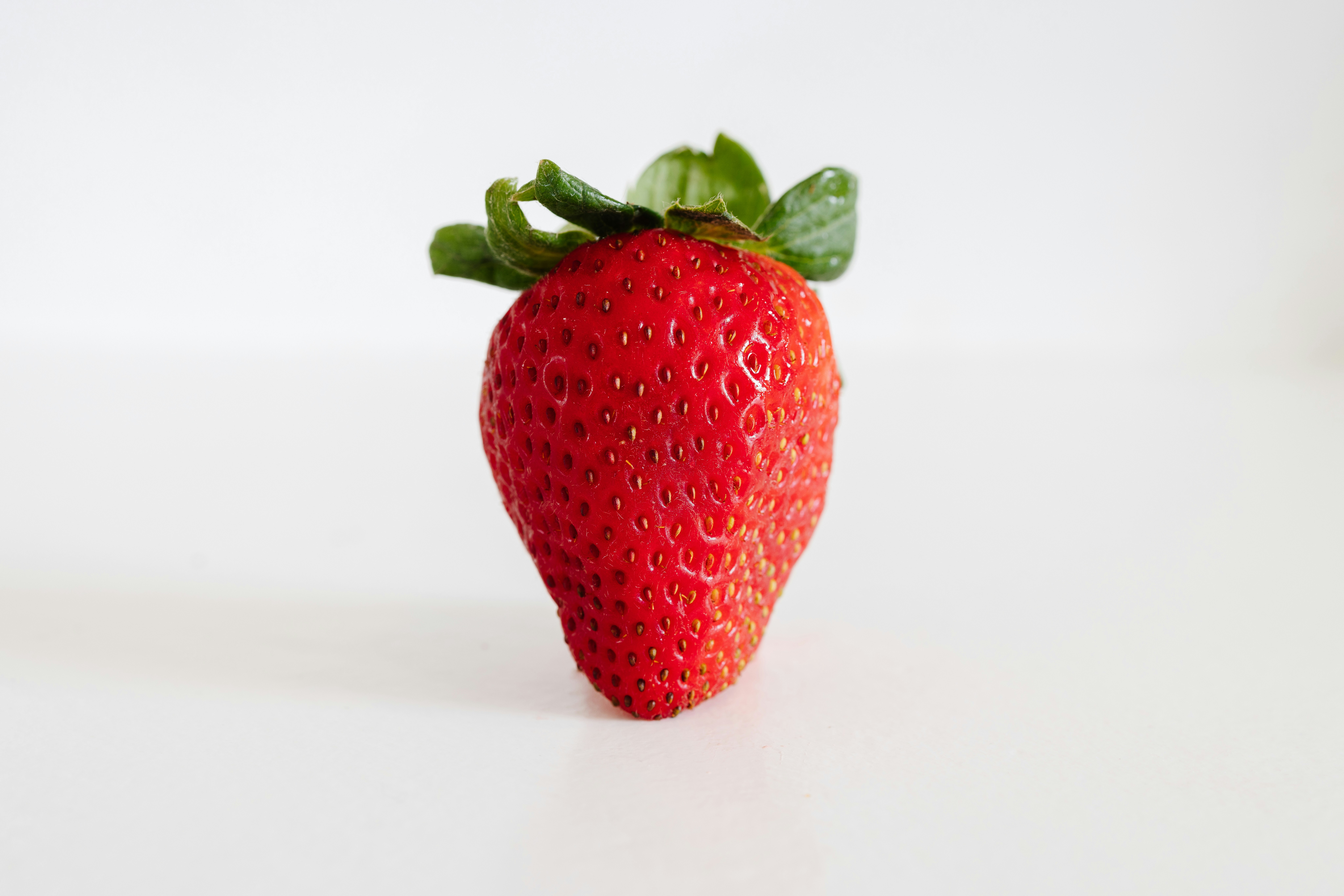
Name: Strawberry, the garden strawberry (Fragaria × ananassa). The small, intensely flavoured wild or alpine strawberry (Fragaria vesca) is a separate species, and the garden strawberry is a hybrid of two American wild species.
Description
The modern strawberry is a surprisingly recent invention. In the 1700s in France, the large-fruited Chilean strawberry (Fragaria chiloensis), brought back from South America, was crossed by accident with the fragrant Virginia strawberry (Fragaria virginiana) from eastern North America, producing a plant with big, sweet, aromatic fruit. That hybrid is the ancestor of nearly every strawberry grown today.
Botanically, the strawberry is not a true berry. The fleshy red part is the swollen base of the flower, and the tiny “seeds” on its surface are the actual fruits, called achenes. Strawberries are now grown in almost every temperate region and are among the most widely eaten fruit in the world, though they are delicate and spoil quickly.
Main nutrition value
Show all nutrients
Strawberries are an excellent source of vitamin C, and they provide manganese, folate, fibre and plant pigments (anthocyanins), while being relatively low in sugar for a sweet fruit.
How best to be consumed
Strawberries are at their best fresh and ripe, eaten soon after buying, since they do not ripen further once picked.
- Rinse just before eating, then hull, and serve whole or sliced.
- Add to yoghurt, porridge, salads and smoothies for natural sweetness.
- Pair with a little cream, yoghurt or dark chocolate as a simple dessert.
- Freeze whole or sliced for smoothies and sauces when out of season.
- Buy local, in-season fruit where you can, since flavour is far better than out-of-season imports.
Overconsumption could cause…
Strawberries are safe in ordinary amounts, with a few specific points worth knowing.
- Allergic reactions or itchy mouth in some people, including those with other fruit or birch pollen allergies.
- Digestive upset, such as bloating, from a large quantity at once.
- Pesticide residues on conventionally grown fruit, which is why thorough washing is advised.
- Added sugar adding up when eaten as jam, syrups, sweetened sauces and desserts.
Wikipedia — Strawberry, used for origin, naming and history: https://en.wikipedia.org/wiki/Strawberry
Comments
No comments yet.
Log in to leave a comment.