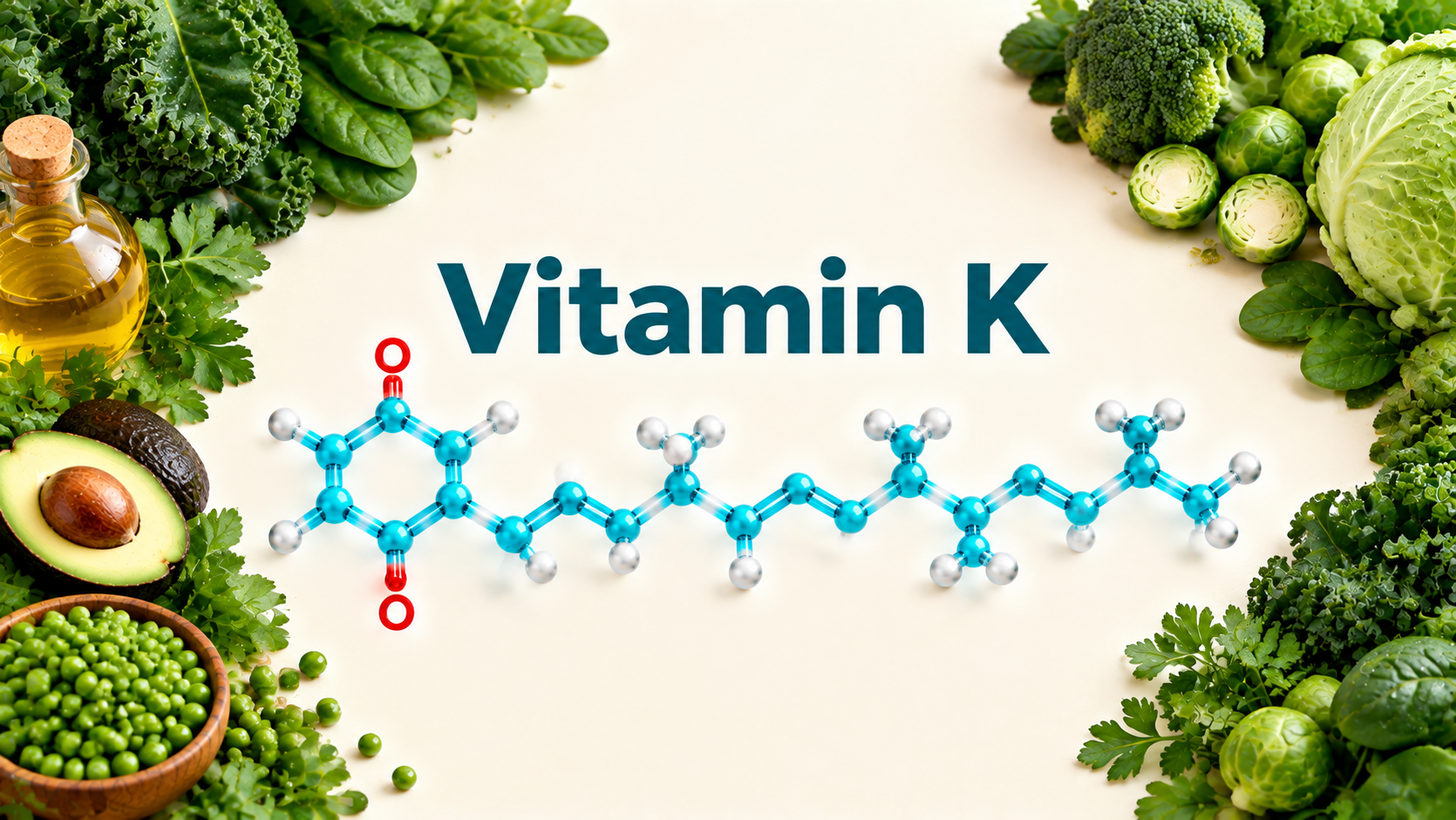
Vitamin K plays a key role in blood clotting and has a supporting role in bone health. Leafy green vegetables are by far the richest dietary source.
What is it?
Vitamin K is a group of fat-soluble compounds. Vitamin K1 (phylloquinone) comes from plants, especially green leafy vegetables, and makes up most of the intake in a typical diet. Vitamin K2 (menaquinones) is found in fermented foods such as natto and some cheeses, in animal foods, and is made by bacteria in the gut, though how much of this gut-made K2 the body uses is uncertain.
What it does
- Is needed to make clotting factors, so blood clots normally after injury
- Activates proteins such as osteocalcin that help build and maintain bone
- Helps keep calcium out of blood vessel walls (research is ongoing)
- Plays a role in the growth and repair of cells
Food sources
Cooked spinach, kale, collards, mustard and turnip greens, broccoli, Brussels sprouts and cabbage are the richest sources; kai lan and chye sim are also excellent. Soybean and canola oils, natto (fermented soybeans), and small amounts in cheese and meat add K1 and K2. Eating green vegetables daily covers most needs.
Singapore food examples
- Kai lan, chye sim, spinach and kang kong, stir-fried or steamed
- Broccoli and cabbage
- Lettuce and salad leaves with a little oil
- Natto at Japanese restaurants, and other fermented soya foods
- Soybean and canola oil in cooking
- Parsley, coriander and other fresh herbs added generously
How much do I need?
Singapore's RDA table does not list vitamin K. The US National Academies set an Adequate Intake (AI) of 120 micrograms a day for men and 90 micrograms for women aged 19 and over. One serving of cooked leafy greens can provide more than the whole day's needs. See Singapore's age- and sex-specific Recommended Dietary Allowances (HealthHub) for the nutrients Singapore does list.
Low intake and deficiency
Vitamin K deficiency is rare in healthy adults, but it can cause easy bruising, nosebleeds, bleeding gums, heavy menstrual bleeding or blood in the urine or stool. People at higher risk include those with conditions that reduce fat absorption (cystic fibrosis, coeliac disease, Crohn's disease), after weight-loss surgery, and those on long-term antibiotics or very restricted diets.
Newborns are born with low vitamin K stores, so a vitamin K injection is routinely offered soon after birth to prevent a rare but serious bleeding disorder.
Too much and safety
No upper limit has been set for vitamin K, as no toxicity from food or supplements has been seen in healthy people.
However, vitamin K can interfere with warfarin (a blood thinner), which works by blocking vitamin K's action. If you take warfarin, do not avoid green vegetables — instead, keep your vitamin K intake consistent from week to week, and tell your doctor about any big diet changes or supplements so that the dose can be adjusted. Newer blood thinners (DOACs) do not have this interaction. Ask your doctor or pharmacist which applies to you.
Absorption and bioavailability
Vitamin K is fat-soluble, so it is absorbed better with some fat. Eat cooked or raw greens with a little oil, nuts or other fats; the K1 in plants is tightly bound in leaf cells, so chopping, chewing and cooking help release it.
Menaquinones (K2) from fermented foods are generally absorbed well and stay in the blood longer than K1.
Connection to daily life
- Bone health: works with vitamin D and calcium to support strong bones
- Healthy ageing: bone strength matters more with age, so regular green vegetables help
- Heart health: research continues into how vitamin K helps keep arteries flexible
- Medicines: if you take warfarin, aim for steady vitamin K intake and ask your doctor before changing your diet or taking supplements
Food sources table
Amounts per serving from NIH data, ranked from highest to lowest.
Food | mcg per serving | % DV |
|---|---|---|
Natto, 3 ounces (as MK-7) | 850 | 708 |
Collards, frozen, boiled, ½ cup | 530 | 442 |
Turnip greens, frozen, boiled, ½ cup | 426 | 355 |
Spinach, raw, 1 cup | 145 | 121 |
Kale, raw, 1 cup | 113 | 94 |
Broccoli, chopped, boiled, ½ cup | 110 | 92 |
Soybeans, roasted, ½ cup | 43 | 36 |
Carrot juice, ¾ cup | 28 | 23 |
Soybean oil, 1 tablespoon | 25 | 21 |
Edamame, frozen, prepared, ½ cup | 21 | 18 |
Pumpkin, canned, ½ cup | 20 | 17 |
Pomegranate juice, ¾ cup | 19 | 16 |
Okra, raw, ½ cup | 16 | 13 |
Pine nuts, dried, 1 ounce | 15 | 13 |
Blueberries, raw, ½ cup | 14 | 12 |
Iceberg lettuce, raw, 1 cup | 14 | 12 |
Grapes, ½ cup | 11 | 9 |
Canola oil, 1 tablespoon | 10 | 8 |
Cashews, dry roasted, 1 ounce | 10 | 8 |
Carrots, raw, 1 medium | 8 | 7 |
Olive oil, 1 tablespoon | 8 | 7 |
Sources: 1. NIH Office of Dietary Supplements — Vitamin K Fact Sheet for Health Professionals: https://ods.od.nih.gov/factsheets/VitaminK-HealthProfessional/ 2. HealthHub Singapore — Recommended Dietary Allowances: https://www.healthhub.sg/well-being-and-lifestyle/food-diet-and-nutrition/recommended_dietary_allowances 3. Health Promotion Board — Singapore Food Insights Database (SG FoodID): https://www.hpb.gov.sg/healthy-living/food-and-beverage/sgfoodid/ 4. FAO/INFOODS — Food composition tables and databases: https://www.fao.org/food-composition/tables-and-databases/en/ 5. NIH Office of Dietary Supplements — all fact sheets: https://ods.od.nih.gov/factsheets/list-all/ Food sources table: National Institutes of Health, Office of Dietary Supplements — Vitamin K Fact Sheet for Health Professionals, Table 2.
Comments
No comments yet.
Log in to leave a comment.