Also known asCapsicum · Sweet Pepper · Bell Pepper · Capsicum annuum · 甜椒 · 灯笼椒
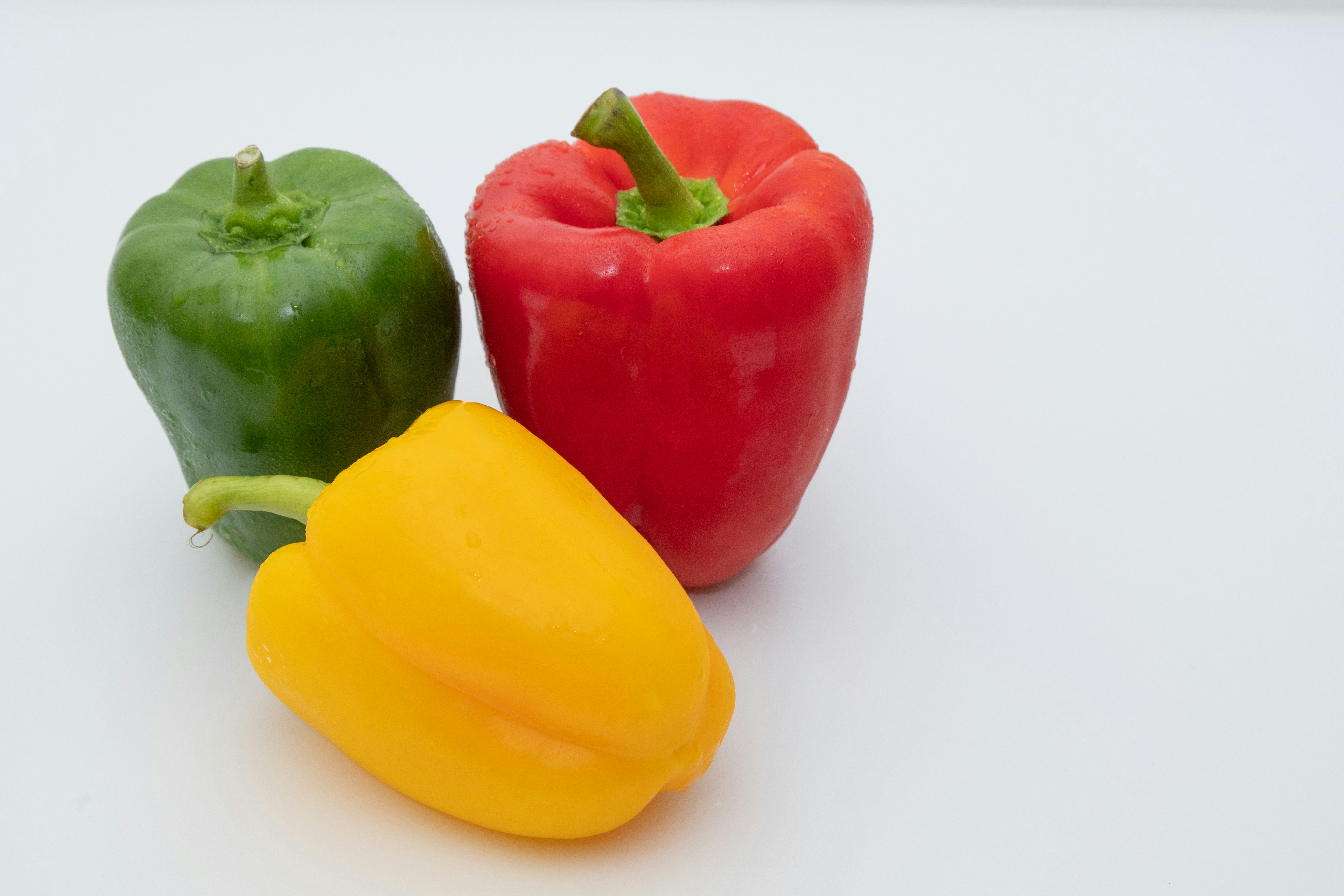
Name: Bell pepper, also called capsicum or sweet pepper (Capsicum annuum) — a hollow, blocky, thick-walled pepper that comes in green, red, yellow, orange, purple and brown, and has no heat. Green, red, yellow and orange peppers also have their own pages.
Description
Peppers are native to Central and South America, where they have been cultivated for thousands of years. Columbus took them to Europe, and they spread quickly through the world. The name “pepper” was a mistake, since Columbus was looking for black pepper. Bell peppers lack capsaicin, the compound responsible for heat in chillies, because of a recessive gene.
The different colours are mostly different stages of ripeness: green peppers are unripe, and as they ripen they turn yellow, orange and red, becoming sweeter and richer in nutrients. Some varieties are bred to ripen to yellow, orange or purple.
Main nutrition value
Show all nutrients
Bell peppers are an exceptional source of vitamin C, especially the red ones, which provide several times more than an orange, and also provide vitamin A, vitamin B6 and carotenoid antioxidants.
How best to be consumed
Bell peppers are eaten raw and cooked, and can be sweet and crisp or soft and smoky.
- Slice raw into salads, crudités and sandwiches, or dip in hummus.
- Roast or char until blackened, then peel and marinate in olive oil for a sweet, smoky flavour.
- Stuff with rice, meat or grains, and bake.
- Add to stir-fries, fajitas, stews, curries and pasta sauces.
- Store in the fridge, where they keep for a week or two.
Overconsumption could cause…
Bell peppers are safe and healthy in food amounts.
- Reactions in a small number of people sensitive to nightshade plants, such as joint or digestive complaints, though evidence is limited.
- Gas or indigestion in some people from the skin and seeds, and green peppers in particular.
- Pesticide residues on conventionally grown peppers, so wash well or buy organic.
- Allergic reactions in rare cases, including in people with latex or birch pollen allergies.
Wikipedia — Bell pepper, used for origin, naming and history: https://en.wikipedia.org/wiki/Bell_pepper
Comments
No comments yet.
Log in to leave a comment.