Also known asCitrus paradisi · 西柚
Name: Grapefruit (Citrus × paradisi). Other names and historical variants include pomelo or shaddock in older English usage, though these names now usually refer to the separate species Citrus maxima (pummelo). “Forbidden fruit” is another historical name used in Barbados. Common market types include white/yellow-fleshed, pink, and red grapefruit; examples include Marsh, Ruby Red, Rio Red, Star Ruby, and Oro Blanco (a grapefruit–pummelo hybrid).
Description
Grapefruit is a subtropical citrus tree and fruit in the Rutaceae family, scientifically named Citrus × paradisi. It is widely understood to have originated in Barbados in the 18th century as a natural hybrid of sweet orange (Citrus × sinensis) and pummelo (Citrus maxima), after both ancestral citrus fruits had reached the Caribbean from Asia.
The fruit became established across the West Indies before cultivation expanded to mainland America and other citrus-growing regions. Today it is cultivated in countries including the United States, Israel, Cyprus, South Africa, and Brazil.
Grapefruit is generally larger than an orange, usually about 10 to 15 cm across, with a thick rind and segmented, juicy pulp. Its flavour is mildly acidic, bittersweet, and sometimes noticeably bitter; pulp colour ranges from pale yellow to pink or deep red depending on the variety.
Main nutrition value
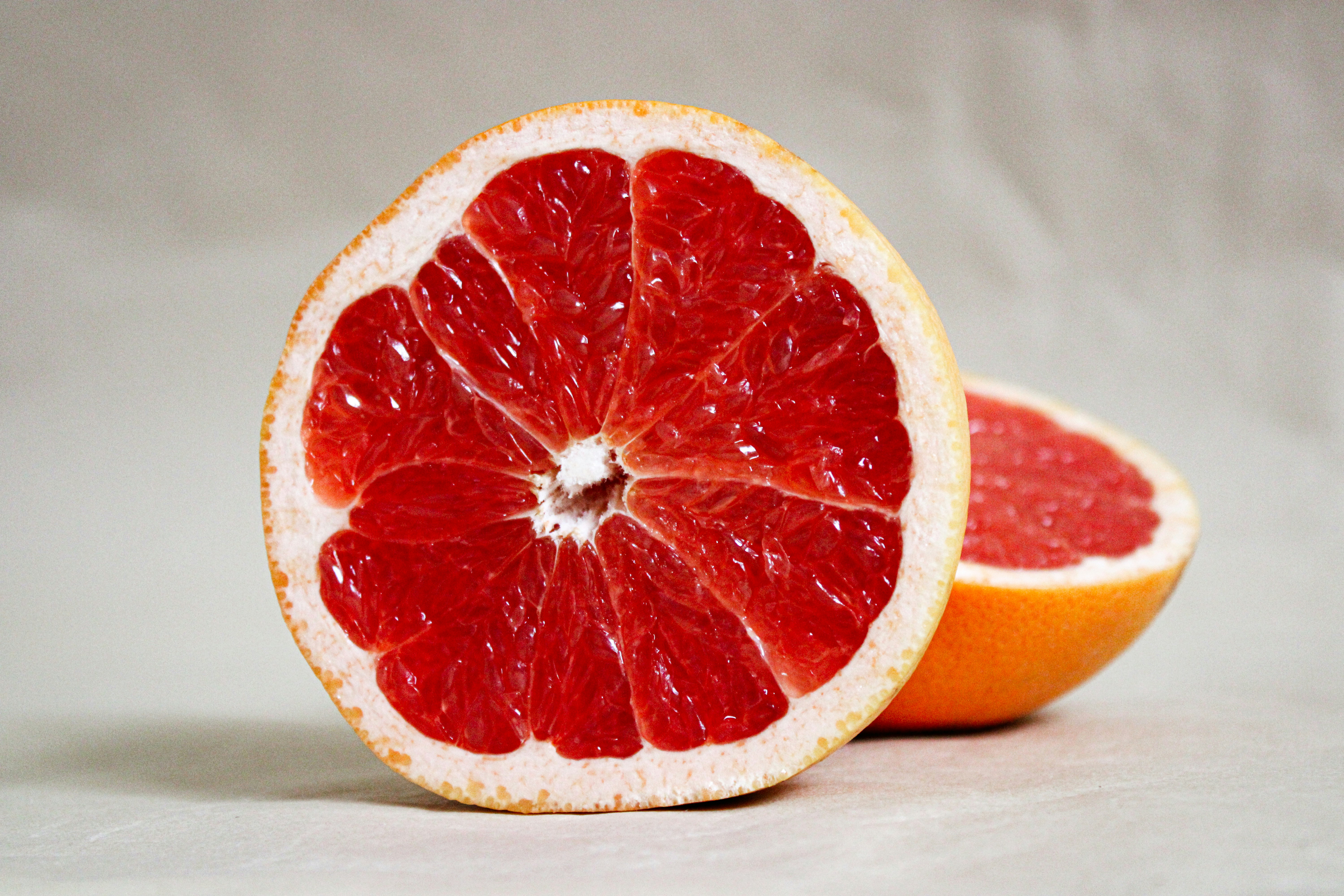
Grapefruit is particularly valued for vitamin C, contributing about 31 mg per 100 g, as well as water, modest dietary fibre, potassium, and—especially in pink and red types—carotenoids such as beta-carotene and lycopene. Britannica also identifies grapefruit as a rich vitamin C source.[usda +1]
How best to be consumed
Eat grapefruit as a whole fruit or as freshly cut segments to retain its naturally occurring fibre and promote greater fullness than juice alone. Remove the peel and bitter white pith as preferred; the segments work well in breakfast bowls, salads, yoghurt, savoury dishes, or as a snack.
Fresh juice can be enjoyed occasionally, but it is easier to consume several fruits’ worth quickly and it provides much less fibre when pulp is strained away. The peel contains aromatic citrus oils and can be used as zest only after thoroughly washing the fruit; use small amounts because grapefruit peel and pith can be intensely bitter.
Overconsumption could cause…
Grapefruit is safe for most people as a normal food, but its acidity may aggravate reflux symptoms or mouth irritation in people who are sensitive to acidic foods. Large amounts of grapefruit or grapefruit juice may also contribute to dental enamel erosion over time, particularly when consumed frequently between meals.
The most important precaution is grapefruit–medicine interaction. Grapefruit can change how the body processes certain medicines, potentially increasing or decreasing drug levels; this can be clinically significant with some cholesterol-lowering medicines, blood-pressure medicines, heart-rhythm medicines, immunosuppressants, and other prescription drugs. Do not assume that pink, red, white, fresh, or juice forms are interchangeable in safety: ask a pharmacist or prescribing clinician whether your particular medicine should be separated from or avoided with grapefruit.
Large juice-heavy intakes may also add substantial free-liquid sugar without the fibre of the whole fruit, while abruptly increasing fibre from whole grapefruit can cause bloating or loose stools in some people. A usual serving is unlikely to cause these effects.
USDA FoodData Central — Grapefruit, raw nutrient search and food-detail nutrient records: https://fdc.nal.usda.gov/food-search/?query=grapefruit%2C%20raw[usda] • Encyclopaedia Britannica — Grapefruit: https://www.britannica.com/plant/grapefruit[britannica] • Wikipedia — Grapefruit, used for common and historical naming context and hybrid background: https://en.wikipedia.org/wiki/Grapefruit[wikipedia] • Singapore Health Promotion Board — Singapore Food Insights Database: https://www.hpb.gov.sg/healthy-living/food-and-beverage/sgfoodid/[hpb] • FAO/INFOODS — Food-composition tables and database directory: https://www.fao.org/food-composition/tables-and-databases/en/
Comments
No comments yet.
Log in to leave a comment.