Name and Other Names: Tonic water. Also called Indian tonic water, quinine water or simply tonic. Diet, slimline or zero versions use sweeteners instead of sugar, and flavoured tonics (elderflower, citrus and others) are common. Tonic with lemon or lime juice added is sold as bitter lemon or bitter lime.
Not the same as soda water, which is plain carbonated water with no bitter flavour and no sugar.
Description: What is tonic water? History and background
Tonic water is a carbonated soft drink flavoured with quinine, a bitter compound from the bark of the cinchona tree. Its bitterness is the point: it is mostly drunk as a mixer, most famously with gin.
Spanish colonists used cinchona-bark quinine against malaria from the 17th century, having learned of it from Indigenous peoples of Peru, Bolivia and Ecuador. In early 19th-century British India, quinine was mixed with soda and sugar to make it easier to take, and tonic water was born. The first commercial version was patented in London in 1858 by Erasmus Bond of Pitt & Co, and the first known record of the gin and tonic dates from British India in 1868. Modern tonic water is sweeter and contains much less quinine than those early versions. The espresso tonic is a more recent invention, from Helsingborg in Sweden.
Quinine glows blue under ultraviolet light, which is why tonic water looks luminous under a black light.
Ingredients and how it is made
- Ingredients: carbonated water, quinine, and a sweetener: sugar or glucose-fructose syrup in regular tonic, or sweeteners such as aspartame in diet versions. Flavourings and acids are usually added as well.
- Quinine limit: the US limit is 83 mg per litre and the European limit is 100 mg per litre. A can of tonic water therefore holds at most roughly 30 mg of quinine, far below the amounts used to treat malaria.
- Process: the water is carbonated like sparkling water, and a syrup of sweetener, quinine and flavourings is blended in before the drink is sealed.
Main nutritional value
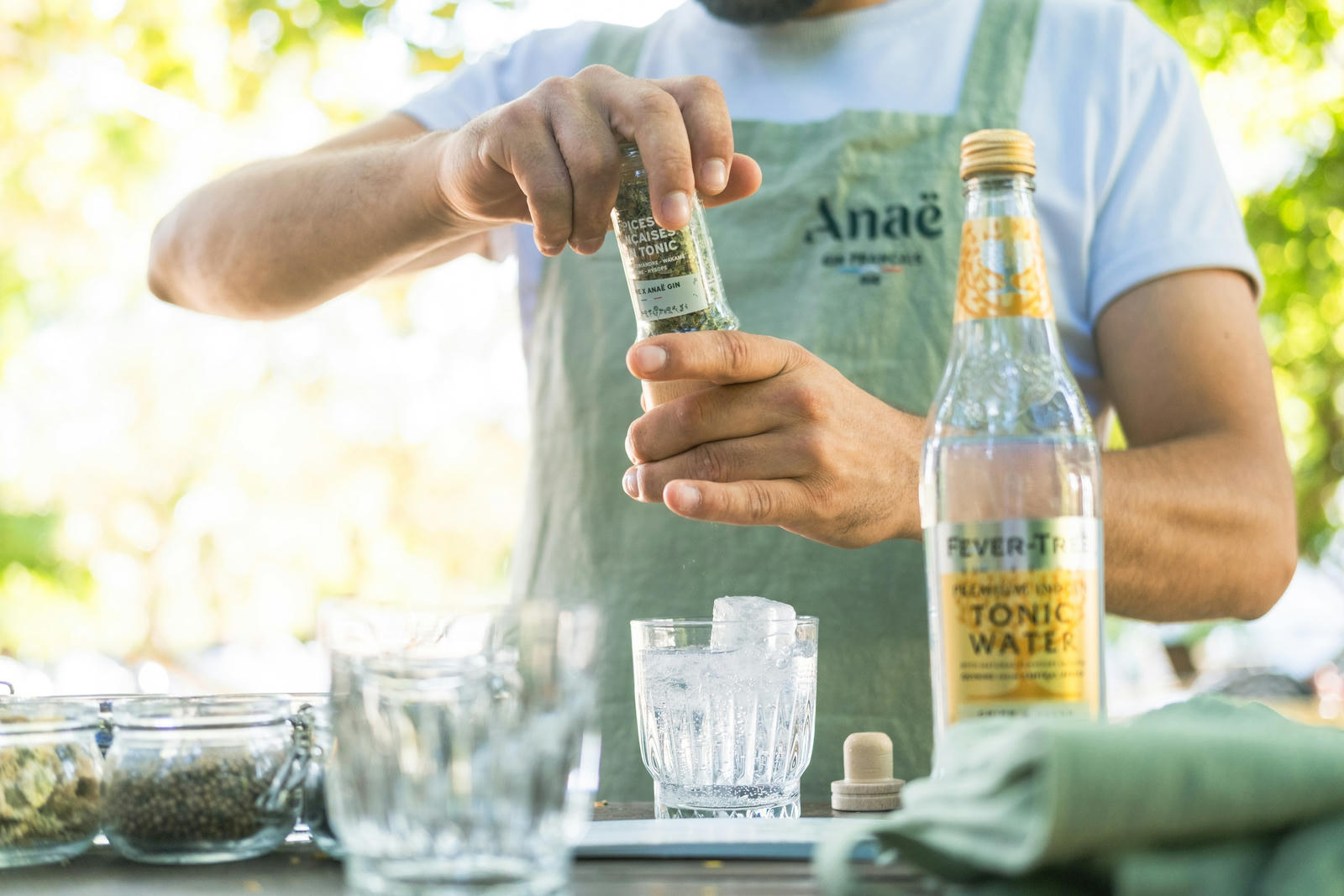
Unlike soda water, regular tonic water is a sweetened drink. Per 100 g, USDA tonic water has 34 kcal and 8.8 g of carbohydrate, all of it sugars, with 91.1 g of water and very little else (sodium 12 mg, calcium 1 mg). A 12 fl oz (366 g) can has about 32 g of sugar and 124 kcal. That is close to regular cola, which has 9.9 g of sugar per 100 g in the same database.
Quinine is not a nutrient and does not appear on a nutrition table. Diet tonic water has little or no sugar and very few calories, so check the label.
Potential benefits
- It gives a bitter, dry fizzy drink with slightly less sugar than cola. Diet versions are a low-calorie alternative.
- It counts as fluid, and it lets you make a long, slow drink with a small measure of spirit or no alcohol at all.
Tonic water is not a health drink. Its history as a malaria remedy does not carry over: the quinine in a modern tonic is far too little to prevent or treat malaria.
How best to consume it
- Treat it as an occasional mixer, not an everyday drink.
- Use a smaller serving (150–200 ml), or mix it half and half with soda water to cut the sugar while keeping some bitterness.
- Choose a diet or zero version if you are watching sugar, and serve it cold with plenty of ice, a slice of lemon or lime, or a few herbs.
- If it is mixed with gin or vodka, the alcohol adds calories and its own health risks. See cocktails.
Overconsumption could cause…
- A high sugar and calorie intake from regular tonic: two cans add roughly 250 kcal and 64 g of sugar.
- Tooth damage from the combination of sugar and acid, as with other sweet fizzy drinks.
- Quinine side effects, which are uncommon at tonic water levels: a skin reaction called a “fixed eruption” has been reported, and one case report linked tonic water to Stevens–Johnson syndrome, a severe skin reaction.
Potential drawbacks, and who may need to limit it
- People with diabetes, or anyone managing weight or blood sugar: regular tonic is a sugary drink. Choose diet tonic or soda water.
- People with a quinine allergy or sensitivity: avoid it completely, along with any other quinine-containing drink.
- People with myasthenia gravis: quinine acts as a neuromuscular blocker and may worsen muscle weakness.
- People who have had a bad reaction to quinine medicine, such as unexplained bruising or rashes, should ask a doctor before drinking tonic water.
Common myths about tonic water
- “Tonic water prevents or cures malaria.” No. Modern tonic holds at most 83–100 mg of quinine per litre, far below treatment doses.
- “Tonic water cures leg cramps.” No. Quinine was once recommended for leg cramps, but the US FDA cautions against that off-label use, and a drink is not a treatment.
- “It is just flavoured sparkling water.” No. Regular tonic has about 8.8 g of sugar per 100 g, while soda water has none.
- “Diet tonic is nutritionally the same.” Diet tonic is sweetened with non-sugar sweeteners, so it has few calories. Quinine and the other ingredients are the same.
What to check on the label
- Sugars per 100 ml and per serving: regular tonic is typically 8–9 g per 100 ml.
- Nutri-Grade (Singapore): grade A is up to 1 g sugar per 100 ml with no sweetener, B is over 1 to 5 g, C is over 5 to 10 g and D is over 10 g. A grade C or D mark is mandatory on the front of the pack, and a regular tonic with about 9 g per 100 ml falls in the C band.
- Diet, zero or slimline and the sweeteners named in the ingredients.
- Quinine in the ingredients list, and the serving size of cans and bottles.
- Flavoured versions, such as bitter lemon, ginger or elderflower, often carry more sugar than plain tonic.
Sources and last reviewed
See the reference list below. Last reviewed: November 2026.
Sources: 1. USDA FoodData Central — Beverages, carbonated, tonic water (FDC 171869): https://fdc.nal.usda.gov/food-details/171869/nutrients 2. USDA FoodData Central — Beverages, carbonated, cola, regular (SR Legacy), used for the cola comparison: https://fdc.nal.usda.gov/food-details/174852/nutrients 3. Wikipedia — Tonic water: https://en.wikipedia.org/wiki/Tonic_water 4. US Code of Federal Regulations, 21 CFR 172.575 — Quinine in carbonated beverages (limit 83 ppm): https://www.law.cornell.edu/cfr/text/21/172.575 5. HealthHub Singapore — Nutri-Grade mark: https://healthhub.sg/programmes/nutrition-hub/nutri-grade-mark 6. Ministry of Health Singapore — Mandatory nutrition labelling and advertising prohibitions for Nutri-Grade beverages: https://www.moh.gov.sg/news-highlights/details/mandatory-nutrition-labelling-and-advertising-prohibitions-for-nutri-grade-beverages-from-30-december-2022 7. Health Promotion Board — Singapore Food Insights Database (SG FoodID): https://www.hpb.gov.sg/healthy-living/food-and-beverage/sgfoodid/
Comments
No comments yet.
Log in to leave a comment.