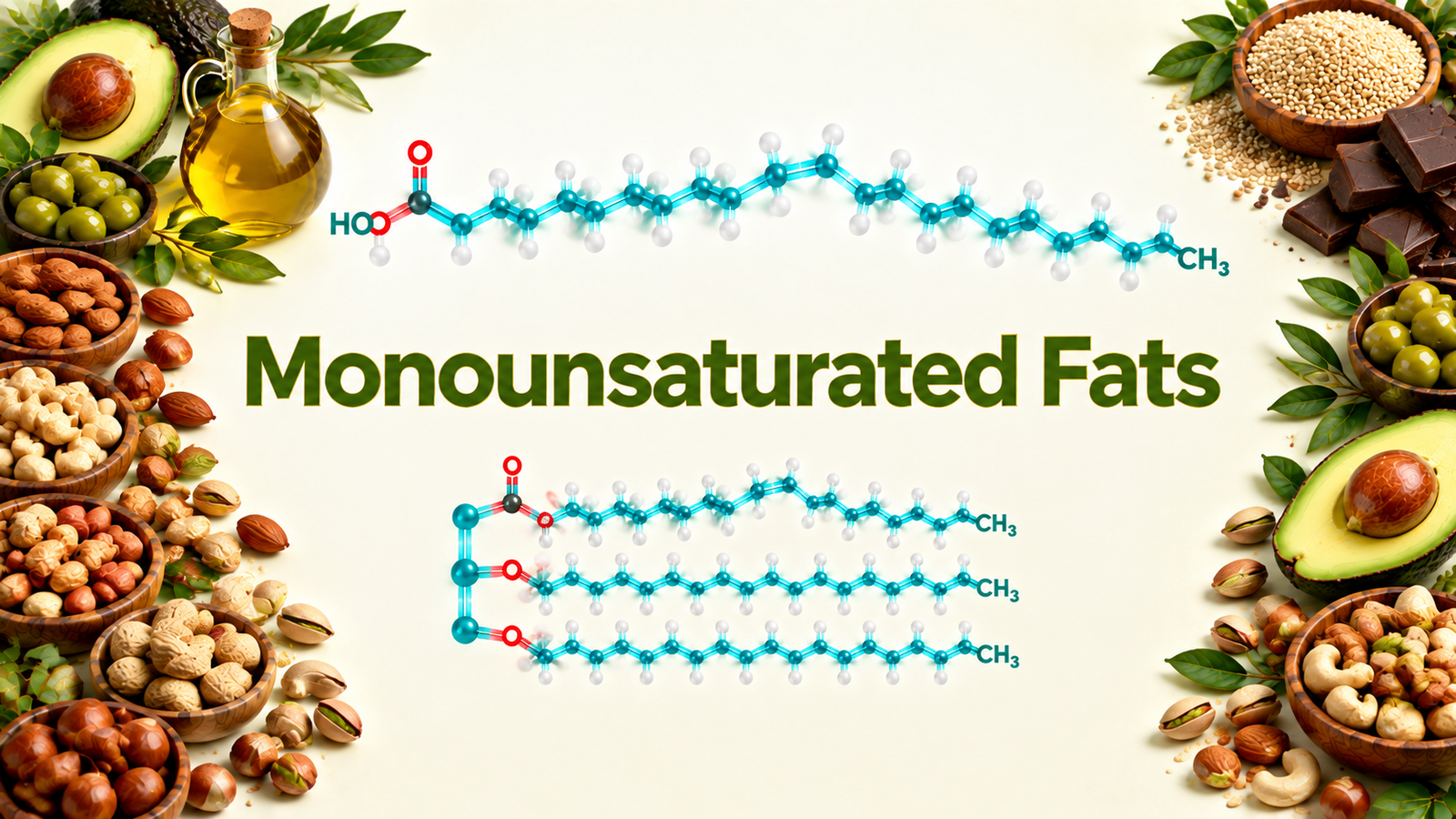
Monounsaturated fats have one double bond in their carbon chain. The main one is oleic acid, found in olive oil, canola oil, avocado and nuts. Swapping saturated fat for monounsaturated fat can lower LDL cholesterol and is a feature of the Mediterranean diet.
What is it?
Monounsaturated fatty acids (MUFAs) are liquid at room temperature and begin to solidify when chilled. The body can make them, so they are not essential, but they are an important part of a healthy fat intake.
What it does
- Provide energy and build cell membranes
- Lower LDL ("bad") cholesterol when replacing saturated fat
- Provide vitamin E (in nuts and many oils)
- Are more stable to heat than most polyunsaturated oils
Food sources
Olive oil (see Olive Oil), canola (rapeseed) oil, peanut oil, high-oleic sunflower oil, avocado, olives, almonds, cashews, hazelnuts, pecans and peanuts. Meat and dairy contain some.
Singapore food examples
- Olive, canola and peanut oil for stir-frying and dressings
- Avocado on toast or in salads
- Almonds, cashews and peanuts
- Olives in salads and Mediterranean dishes
- Satay-style peanut sauce — choose smaller portions
How much do I need?
There is no recommended intake for monounsaturated fat on its own. Singapore guidelines advise 30 to 35 percent of energy from total fat with less than 10 percent from saturated fat; the rest is best taken as unsaturated fat — see Singapore's dietary guidelines for adults (HealthHub).
Low intake and deficiency
There is no deficiency; the body can make monounsaturated fat. Low intake means other fats or carbohydrate provide the energy.
Too much and safety
Monounsaturated fat is as energy-dense as other fats (about 9 kilocalories per gram), so large amounts still lead to weight gain. Choose it in place of saturated fat, not in addition to it.
Absorption and bioavailability
Absorbed efficiently in the small intestine, like other fats. Extra virgin olive oil also supplies polyphenols that are lost in refined oils. Oils with higher smoke points (refined olive, canola, peanut) suit high-heat stir-frying.
Connection to daily life
- Heart health: a core part of the Mediterranean eating pattern
- Cooking: choose a monounsaturated oil for everyday cooking
- Healthy ageing: nut and olive oil-rich diets are linked with better heart health
Sources: 1. National Academies of Sciences, Engineering, and Medicine — Dietary Reference Intakes for Energy, Carbohydrate, Fiber, Fat, Fatty Acids, Cholesterol, Protein, and Amino Acids (2005) 2. HealthHub Singapore — Recommended Dietary Allowances: https://www.healthhub.sg/well-being-and-lifestyle/food-diet-and-nutrition/recommended_dietary_allowances 3. HealthHub Singapore — Dietary guidelines for adults: https://www.healthhub.sg/well-being-and-lifestyle/food-diet-and-nutrition/dietary_guidelines_adults 4. Health Promotion Board — Singapore Food Insights Database (SG FoodID): https://www.hpb.gov.sg/healthy-living/food-and-beverage/sgfoodid/ 5. FAO/INFOODS — Food composition tables and databases: https://www.fao.org/food-composition/tables-and-databases/en/
Comments
No comments yet.
Log in to leave a comment.