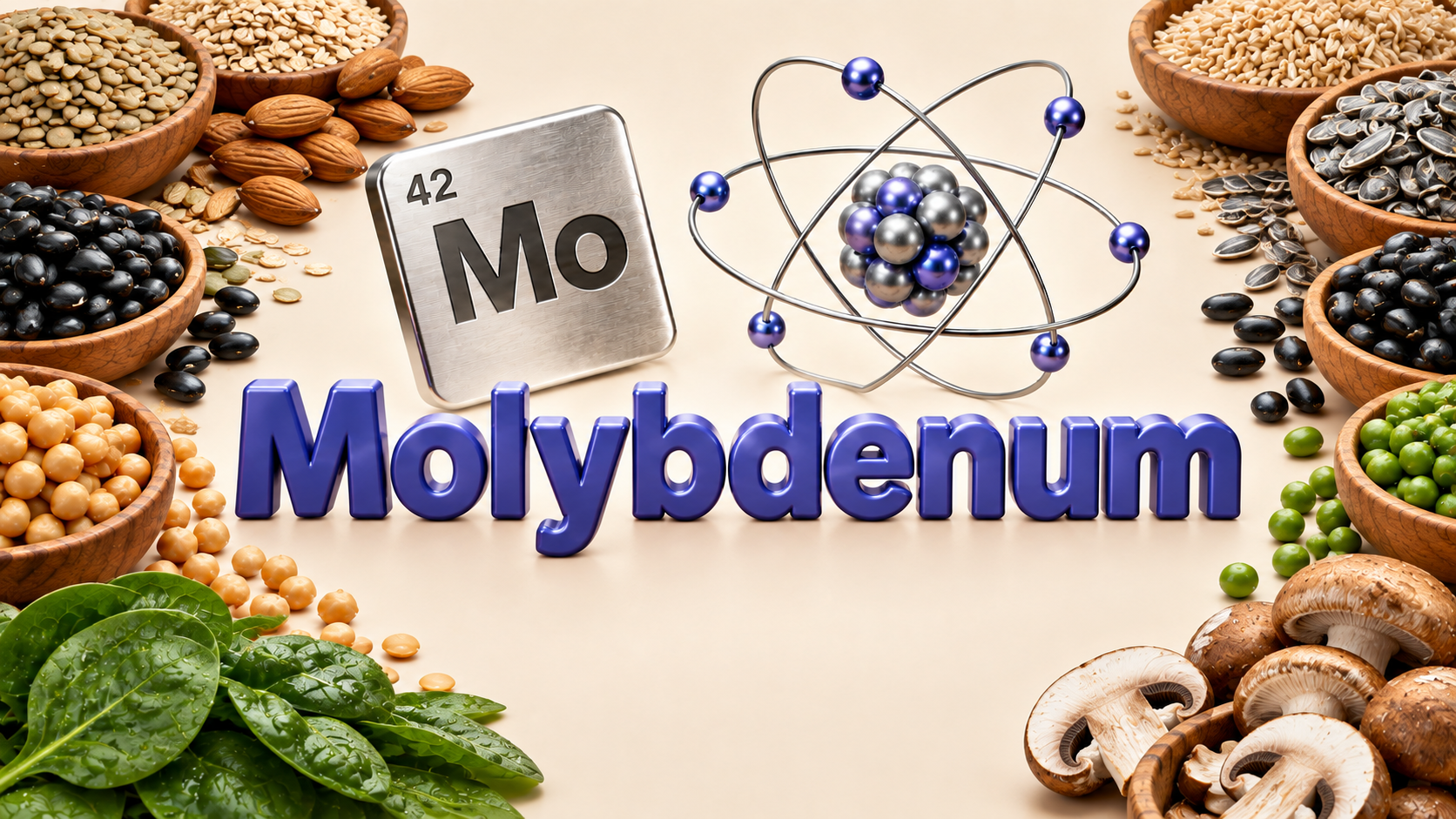
Molybdenum is a trace mineral that works as a helper for enzymes that process sulfur-containing amino acids, purines and toxins. Legumes, grains and nuts supply it, and deficiency is virtually unknown outside rare inherited conditions.
What is it?
Molybdenum is a cofactor for at least four enzymes, including sulfite oxidase (which converts sulfites into harmless sulfate), xanthine oxidase (involved in making uric acid) and aldehyde oxidase. The amount in plant foods depends strongly on the molybdenum in the soil.
What it does
- Helps break down sulfites and sulfur-containing amino acids
- Helps the body process purines into uric acid
- Helps the liver process some drugs and toxins
Food sources
Legumes (lentils, black-eyed peas, split peas, beans), grains, nuts, leafy vegetables and organ meats are the main sources. Fruit, most vegetables and meat contain less.
Singapore food examples
- Dhal, lentils and chickpeas
- Black-eyed peas and soya beans
- Brown rice, oats and wholegrain bread
- Peanuts and other nuts
- Leafy greens such as kai lan
How much do I need?
Singapore's RDA table on HealthHub does not list this nutrient, so the figures below come from US and Canadian reference intakes (Dietary Reference Intakes). Use them as a guide, and see Singapore's age- and sex-specific Recommended Dietary Allowances (HealthHub) for the nutrients Singapore does list.
The US National Academies' RDA for molybdenum is 45 micrograms a day for adults, rising to 50 micrograms in pregnancy and breastfeeding. Most diets provide more than this.
Low intake and deficiency
Deficiency from diet alone has not been seen in healthy people. It has been described in a patient fed intravenously for a long time, with rapid heartbeat, headache, confusion and night blindness, and in a rare inherited condition (molybdenum cofactor deficiency) that causes severe brain damage in infancy.
Too much and safety
The upper limit is 2,000 micrograms a day for adults. Excess from supplements or very high intake in some areas can cause gout-like joint pain, high uric acid, and copper loss. A normal diet is not a concern.
Absorption and bioavailability
Molybdenum is well absorbed — roughly 40 to 100 percent of what you eat — and excess is excreted in urine. Sulfate can reduce absorption, and high amounts of molybdenum can increase copper loss.
Connection to daily life
- Sulfite sensitivity: the enzyme molybdenum supports breaks down sulfites, though sensitivity in asthma is mostly not due to molybdenum shortage
- Healthy eating pattern: legumes, grains and nuts provide it without supplements
- Related: see Sulfur and Copper
Sources: 1. National Academies of Sciences, Engineering, and Medicine — Dietary Reference Intakes for Vitamin A, Vitamin K, Arsenic, Boron, Chromium, Copper, Iodine, Iron, Manganese, Molybdenum, Nickel, Silicon, Vanadium, and Zinc (2001) 2. HealthHub Singapore — Recommended Dietary Allowances: https://www.healthhub.sg/well-being-and-lifestyle/food-diet-and-nutrition/recommended_dietary_allowances 3. Health Promotion Board — Singapore Food Insights Database (SG FoodID): https://www.hpb.gov.sg/healthy-living/food-and-beverage/sgfoodid/ 4. FAO/INFOODS — Food composition tables and databases: https://www.fao.org/food-composition/tables-and-databases/en/
Comments
No comments yet.
Log in to leave a comment.