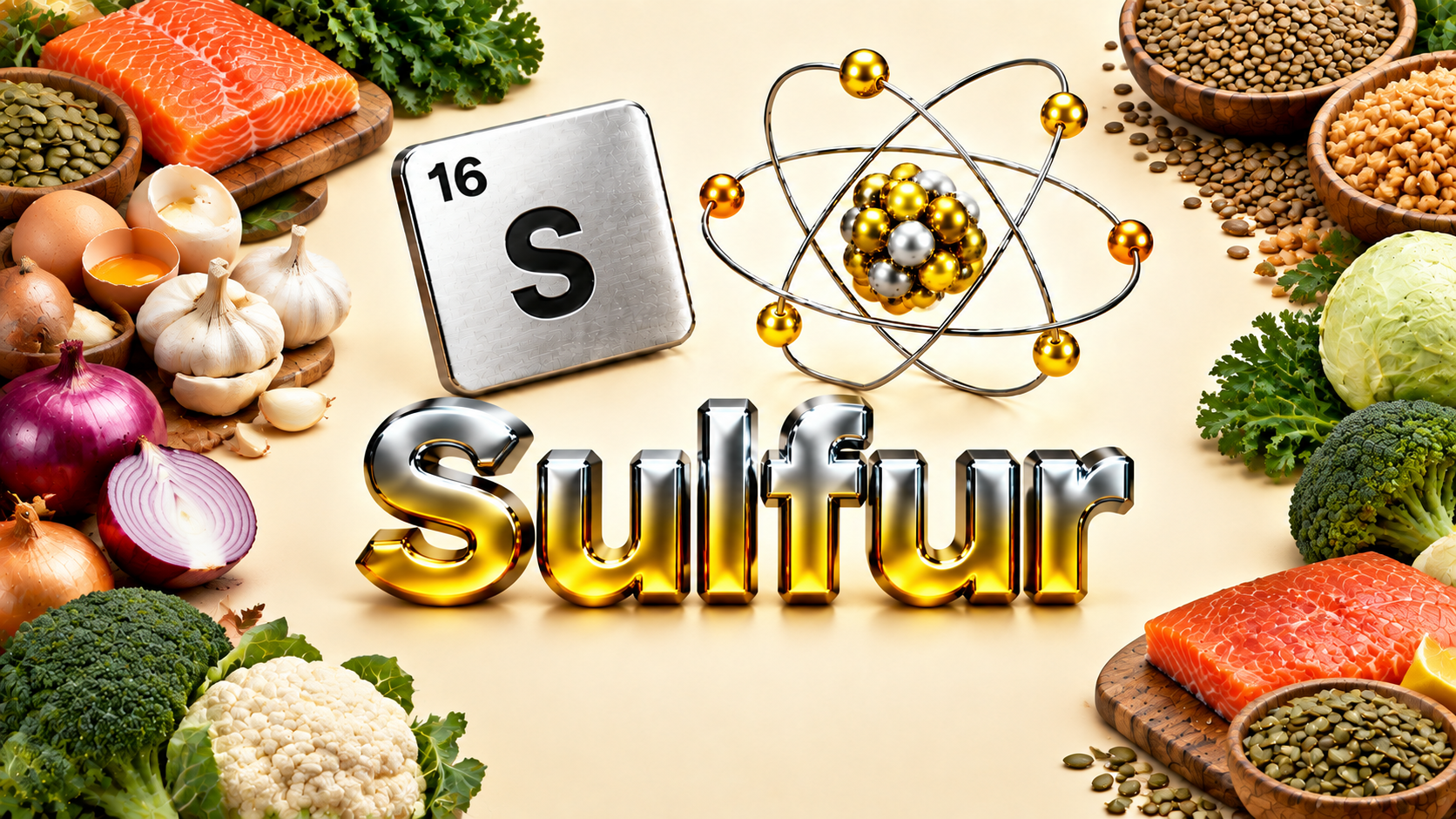
Sulfur is a major mineral that the body gets mainly from the protein in food. It is part of the amino acids methionine and cysteine, and so is built into proteins, hair, nails, connective tissue and the antioxidant glutathione. There is no separate recommended intake: if you eat enough protein, you get enough sulfur.
What is it?
Sulfur is the third most abundant mineral in the body by weight, after calcium and phosphorus. The body cannot use elemental sulfur; it needs it in organic form, as sulfur-containing amino acids, in the vitamins thiamin and biotin, and as sulfate. Methionine is an essential amino acid; cysteine can be made from methionine.
What it does
- Forms disulfide bonds that give proteins, hair, skin and nails their shape and strength
- Is part of glutathione, a major antioxidant, and helps the liver process toxins
- Is part of connective tissue molecules in cartilage, such as chondroitin sulfate
- Is part of thiamin (vitamin B1) and biotin (vitamin B7)
Food sources
Protein-rich foods are the main sources: eggs, meat, poultry, fish, dairy and legumes. Garlic, onions, leeks and vegetables in the cabbage family (broccoli, kale, cabbage, cauliflower) also contain sulfur compounds that give them their smell and taste. Nuts and seeds supply some as well.
Singapore food examples
- Eggs, fish, chicken, beef and pork
- Tofu, tempeh and soya beans
- Garlic, shallots, onions and chives
- Kai lan, cabbage, broccoli and cauliflower
- Dhal and other legumes
- Nuts and seeds
How much do I need?
There is no recommended intake for sulfur by itself, and Singapore's RDA table does not list it. Meeting your protein needs covers sulfur-containing amino acids: the US National Academies' RDA is 19 mg a day of methionine plus cysteine per kilogram of body weight. See Singapore's age- and sex-specific Recommended Dietary Allowances (HealthHub) for the nutrients Singapore does list.
Low intake and deficiency
Isolated sulfur deficiency has not been described in people eating enough protein. A shortfall would appear as part of general protein deficiency: muscle loss, brittle hair and nails, slow healing, and weakened immunity. It is a concern mainly in very restricted diets, illness and older adults with low appetite.
Too much and safety
Sulfur in food is not harmful. Very high levels of sulfate in drinking water can have a laxative effect. Some people are sensitive to sulfites, preservatives in dried fruit, wine and some processed foods, which can trigger wheeze or asthma — read labels if this applies to you. Supplements such as MSM (methylsulfonylmethane) are sold for joint pain, with limited and mixed evidence.
Absorption and bioavailability
Sulfur is absorbed mainly as part of amino acids after protein is digested. Plant proteins from grains are lower in methionine, and legumes in cysteine and methionine, so eating a mix of grains and legumes, or including eggs, dairy or fish, covers it well.
Connection to daily life
- Muscle and recovery: sulfur-containing amino acids support protein building after exercise — see Exercise
- Healthy ageing: older adults with low protein intakes are at risk of falling short
- Joints and skin: marketed in supplements, but a protein-adequate diet is what matters
Sources: 1. National Academies of Sciences, Engineering, and Medicine — Dietary Reference Intakes for Energy, Carbohydrate, Fiber, Fat, Fatty Acids, Cholesterol, Protein, and Amino Acids (2005) 2. HealthHub Singapore — Recommended Dietary Allowances: https://www.healthhub.sg/well-being-and-lifestyle/food-diet-and-nutrition/recommended_dietary_allowances 3. Health Promotion Board — Singapore Food Insights Database (SG FoodID): https://www.hpb.gov.sg/healthy-living/food-and-beverage/sgfoodid/ 4. FAO/INFOODS — Food composition tables and databases: https://www.fao.org/food-composition/tables-and-databases/en/
Comments
No comments yet.
Log in to leave a comment.