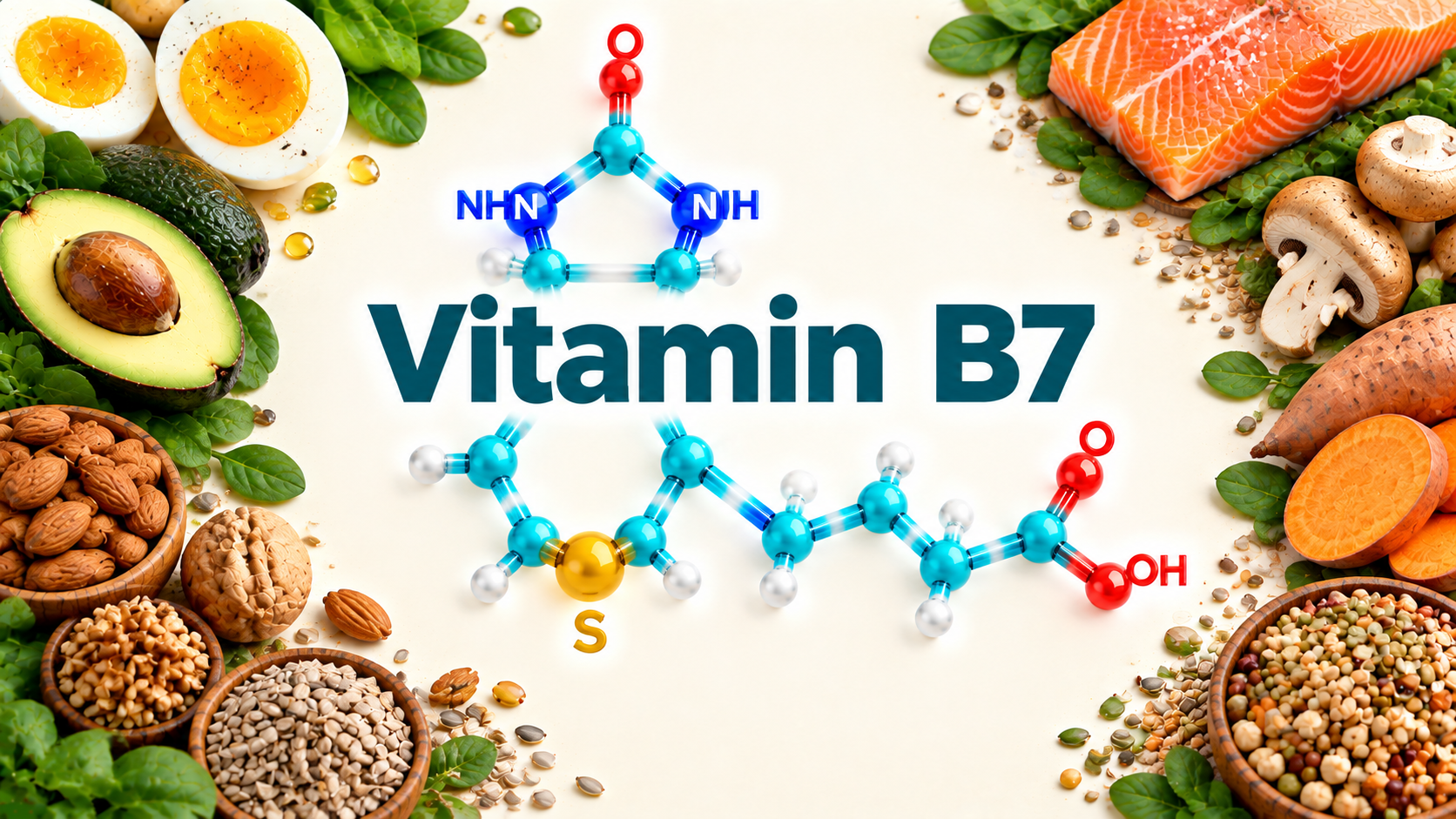
Biotin (vitamin B7) helps the body break down fats, carbohydrates and proteins for energy. It is found in many foods, deficiency is rare, and high-dose biotin supplements can interfere with some laboratory tests.
What is it?
Biotin is a water-soluble B vitamin that acts as a coenzyme for five enzymes (carboxylases) involved in making glucose and fatty acids and breaking down certain amino acids. Gut bacteria produce some biotin, but it is unclear how much of this the body can use.
What it does
- Helps release energy from fat, carbohydrate and protein
- Supports making glucose when blood sugar is low
- Is needed to make fatty acids
- Supports normal skin, hair and nervous system function
Food sources
Cooked eggs (the yolk is the richest part), organ meats such as liver, salmon and other fish, pork, sweet potato, nuts and seeds (almonds, sunflower seeds), mushrooms and some legumes are good sources.
Singapore food examples
- Eggs — soft-boiled, steamed, omelette or tamagoyaki
- Salmon, mackerel and other oily fish
- Sweet potato and yam
- Almonds, peanuts and sunflower seeds
- Mushrooms and soya products such as tofu and tempeh
- Chicken and pork liver in soups — in moderation
How much do I need?
Singapore's RDA table does not list biotin. The US National Academies give an Adequate Intake (AI) of 30 micrograms a day for adults, 30 in pregnancy and 35 when breastfeeding. A varied diet normally covers this. See Singapore's age- and sex-specific Recommended Dietary Allowances (HealthHub) for the nutrients Singapore does list.
Low intake and deficiency
Biotin deficiency is rare. Signs include thinning hair or hair loss, a scaly red rash around the eyes, nose and mouth, brittle nails, and in adults tiredness, depression, numbness or tingling in the hands and feet.
Risk is higher in people who eat large amounts of raw egg whites, people with biotinidase deficiency (a rare inherited condition screened for in some newborn programmes), people on long-term anti-seizure medicines, heavy alcohol users and, sometimes, during pregnancy and breastfeeding.
Too much and safety
No upper limit has been set and biotin from food is not harmful. However, high-dose supplements — commonly sold for hair, skin and nails — can cause falsely high or low results in several blood tests, including thyroid tests and the troponin test used to diagnose heart attacks. Tell your doctor or laboratory if you take biotin, and ask whether to pause it before a blood test.
Absorption and bioavailability
Biotin in food is mostly bound to proteins and is released by digestion before absorption. Raw egg whites contain a protein called avidin that binds biotin tightly and blocks its absorption; cooking denatures avidin, so cooked eggs are fine.
Biotin is fairly stable in cooking, though some is lost to cooking water, and heavy processing and storage can reduce the amount.
Connection to daily life
- Hair, skin and nails: biotin supplements are heavily marketed for these, but there is little evidence of benefit unless you are deficient
- Pregnancy: needs are slightly higher, and low biotin status is fairly common in pregnancy but rarely causes symptoms
- Medical tests: remember to mention biotin supplements before any blood test
- Works alongside pantothenic acid and other B vitamins in energy metabolism — see Exercise
Sources: 1. NIH Office of Dietary Supplements — Biotin Fact Sheet for Health Professionals: https://ods.od.nih.gov/factsheets/Biotin-HealthProfessional/ 2. HealthHub Singapore — Recommended Dietary Allowances: https://www.healthhub.sg/well-being-and-lifestyle/food-diet-and-nutrition/recommended_dietary_allowances 3. Health Promotion Board — Singapore Food Insights Database (SG FoodID): https://www.hpb.gov.sg/healthy-living/food-and-beverage/sgfoodid/ 4. FAO/INFOODS — Food composition tables and databases: https://www.fao.org/food-composition/tables-and-databases/en/ 5. NIH Office of Dietary Supplements — all fact sheets: https://ods.od.nih.gov/factsheets/list-all/
Comments
No comments yet.
Log in to leave a comment.