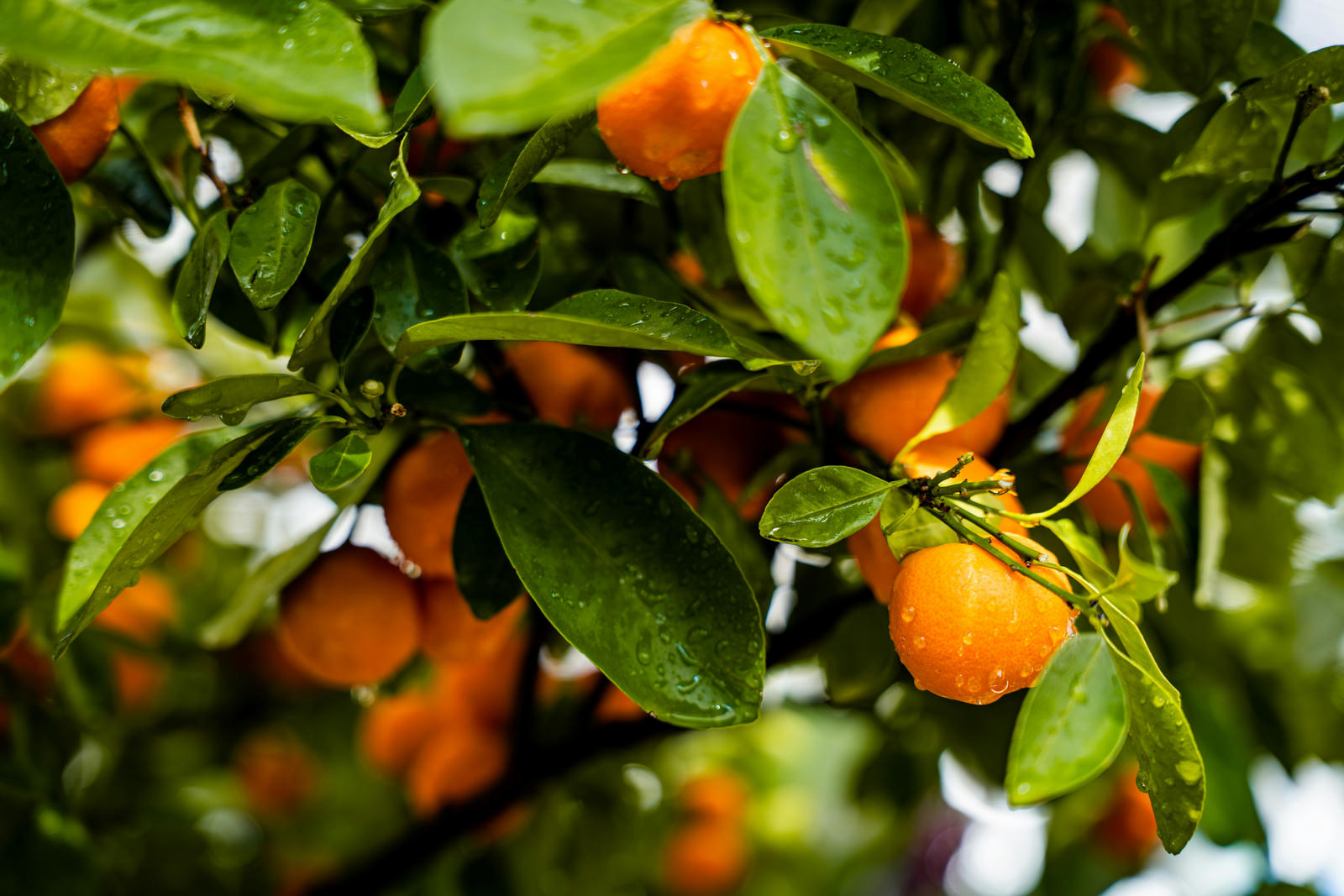
Name: Tangelo — a hybrid of a mandarin or tangerine (Citrus reticulata) and a pomelo or grapefruit (Citrus maxima/paradisi). The name is a portmanteau of “tangerine” and “pomelo.” Well-known tangelo varieties include the Minneola (described on its own page), the Orlando, and the Seville-style Ugli fruit (also its own page), each differing mainly in the specific mandarin and grapefruit parents used.
Description
Tangelo-type crosses are among the oldest hybrid citrus, believed to have first arisen in Southeast Asia over 3,500 years ago. The modern Florida tangelo was deliberately bred in 1911 by Walter Tennyson Swingle of the USDA, crossing a Dancy tangerine with a Duncan grapefruit — the same cross that later produced the Minneola tangelo.
Tangelos typically have a looser skin than a grapefruit but tighter than a true mandarin, and a flavour balanced between the two parents: sweeter and more fragrant than grapefruit, with more tartness than a mandarin alone.
Main nutrition value
Per 100g, USDA-derived tangerine/mandarin data (under which tangelo is catalogued) lists approximately 53 kcal, 13.3g carbohydrate, 10.6g naturally occurring sugars, 1.8g dietary fibre, 0.8g protein and 0.3g fat. Tangelos provide a good amount of vitamin C and beta-cryptoxanthin, a provitamin-A carotenoid, alongside a useful amount of potassium.
How best to be consumed
Tangelos are peeled and eaten fresh much like a mandarin, though the skin can be a little tighter and may need a starting cut.
- Score the skin lightly before peeling by hand if it doesn't come away as easily as a mandarin's.
- Add segments to salads for a sweet-tart contrast with savoury ingredients.
- Press for fresh juice — tangelos are notably juicy and well suited to this.
- Pair with a source of protein or fat for a more filling snack.
- Favour the whole fruit over juice most of the time, to keep the fibre intact.
Overconsumption could cause…
Because tangelos carry some grapefruit parentage, a couple of considerations apply beyond the usual citrus caution.
- Medication interaction: tangelos can contain some of the same furanocoumarin compounds as grapefruit that interfere with how the body processes certain medications — check with a pharmacist or doctor if you take a medication with a grapefruit warning.
- Higher sugar intake from juice, since tangelos are particularly juicy and easy to over-press.
- Tooth enamel exposure with very frequent intake, given the fruit's natural acidity.
U.S. Department of Agriculture, FoodData Central — Tangerine, raw (100g portion): https://fdc.nal.usda.gov/food-details/2709175/nutrients (USDA's Survey (FNDDS) database lists "tangelo" as an additional description under this same tangerine/mandarin-orange entry, rather than as a separate food) Wikipedia — Tangelo, used for hybrid origin and history: https://en.wikipedia.org/wiki/Tangelo
Comments
No comments yet.
Log in to leave a comment.