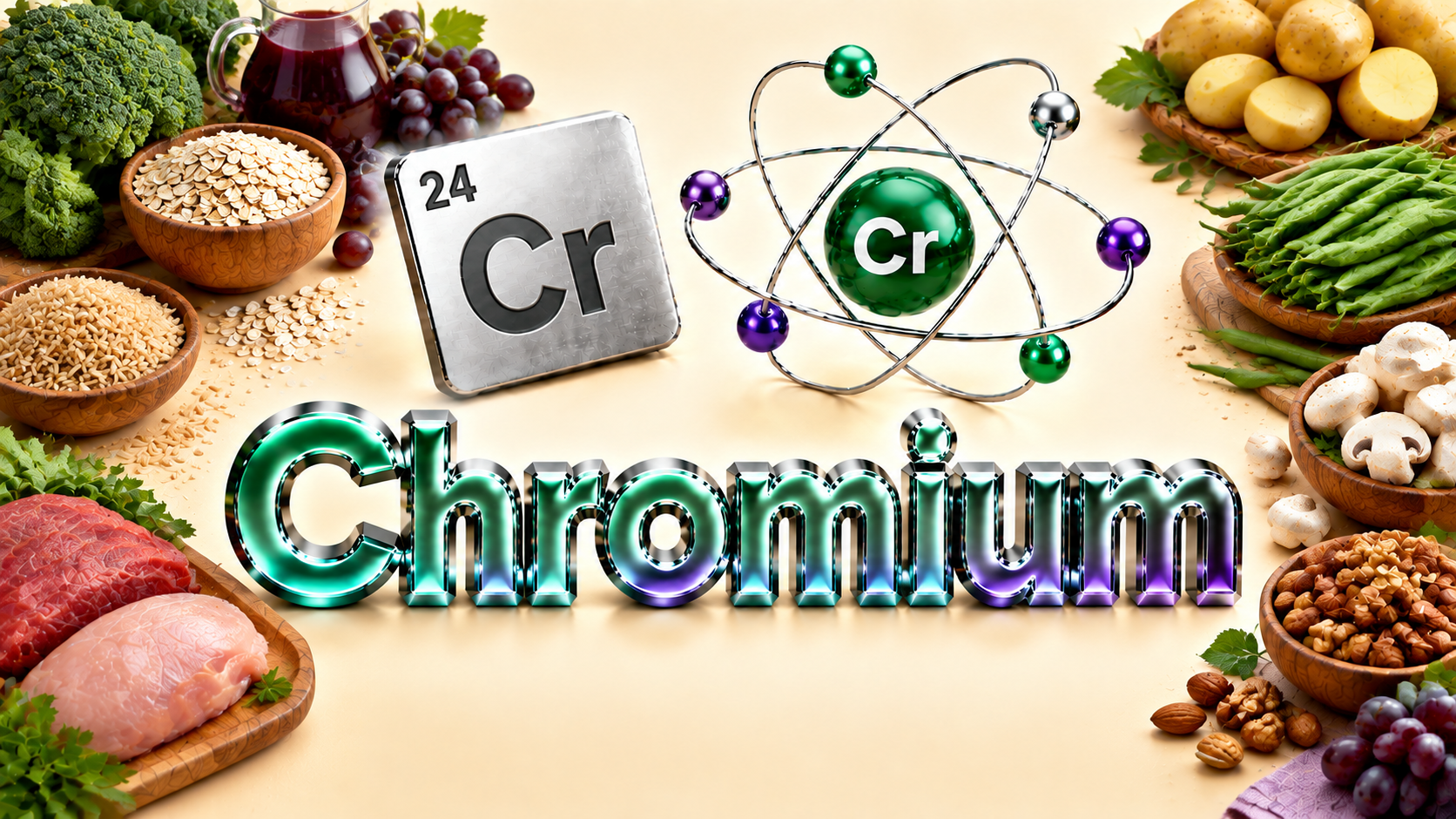
Chromium is a trace mineral that appears to help the hormone insulin work and so affects how the body handles carbohydrate, fat and protein. Whether it is truly essential is debated, deficiency is rarely seen, and supplements have not been proven to help most people.
What is it?
The chromium in food and supplements is trivalent chromium (chromium III), which is the safe form; hexavalent chromium (chromium VI) is an industrial toxin and not related. Chromium is thought to boost the action of insulin, though the exact mechanism is still debated.
What it does
- May help insulin move glucose from the blood into cells
- Is involved in the metabolism of carbohydrate, fat and protein
Food sources
Chromium is widespread in small amounts: broccoli, grape juice, wholegrain products, potatoes, meat, nuts, herbs and spices, and brewer's yeast. Food amounts vary with soil and processing, and food tables rarely list it.
Singapore food examples
- Broccoli and other vegetables
- Wholegrain bread, oats and brown rice
- Beef, chicken and eggs
- Peanuts and other nuts
- Potatoes and sweet potato
- Black pepper, cinnamon and other spices
How much do I need?
Singapore's RDA table on HealthHub does not list this nutrient, so the figures below come from US and Canadian reference intakes (Dietary Reference Intakes). Use them as a guide, and see Singapore's age- and sex-specific Recommended Dietary Allowances (HealthHub) for the nutrients Singapore does list.
The US National Academies set an Adequate Intake of 35 micrograms a day for men and 25 micrograms for women aged 19 to 50, falling to 30 and 20 micrograms from age 51. Most people meet this from food.
Low intake and deficiency
Chromium deficiency has been documented only rarely, mostly in patients who were fed intravenously for a long time without chromium, causing high blood sugar, weight loss and nerve problems that improved with chromium. It is not a recognised problem in people eating normally.
Too much and safety
No upper limit has been set for chromium III, and food intake is safe. Supplements (often as chromium picolinate) have been studied for diabetes and weight loss, with mixed or small effects, so health authorities do not recommend them for these uses. High doses have been linked in rare cases to kidney problems and skin reactions.
Chromium can lower blood sugar, so people with diabetes on medicine should check with their doctor before taking it. It may also interact with thyroid hormone and some other medicines.
Absorption and bioavailability
Only about 0.4 to 2.5 percent of dietary chromium is absorbed. Vitamin C, and possibly some other nutrients, may help, while antacids and some other drugs can lower it. Absorbed chromium is excreted mainly in urine, and amounts rise with sugary diets and strenuous exercise.
Connection to daily life
- Blood sugar: chromium is part of the insulin story, but fibre, wholegrains, healthy weight and activity matter far more
- Exercise: exercise increases chromium loss in urine slightly — a varied diet is enough — see Exercise
- Supplement caution: marketing claims for weight loss and diabetes are not supported by good evidence
Sources: 1. NIH Office of Dietary Supplements — Chromium Fact Sheet for Health Professionals: https://ods.od.nih.gov/factsheets/Chromium-HealthProfessional/ 2. HealthHub Singapore — Recommended Dietary Allowances: https://www.healthhub.sg/well-being-and-lifestyle/food-diet-and-nutrition/recommended_dietary_allowances 3. Health Promotion Board — Singapore Food Insights Database (SG FoodID): https://www.hpb.gov.sg/healthy-living/food-and-beverage/sgfoodid/ 4. FAO/INFOODS — Food composition tables and databases: https://www.fao.org/food-composition/tables-and-databases/en/ 5. NIH Office of Dietary Supplements — all fact sheets: https://ods.od.nih.gov/factsheets/list-all/
Comments
No comments yet.
Log in to leave a comment.