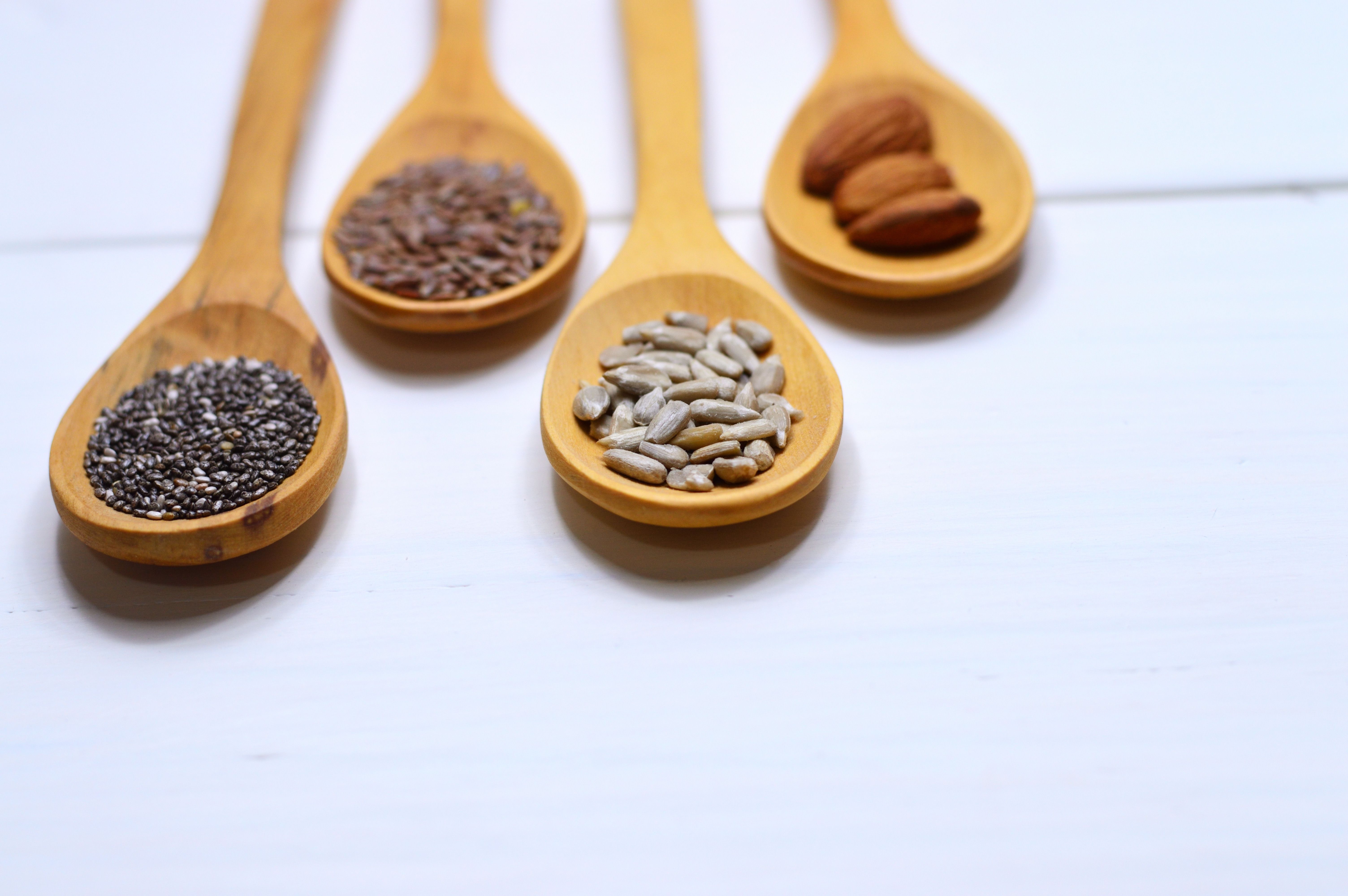
Nuts and seeds are nutrient-dense, packing healthy unsaturated fats, plant protein, fibre, magnesium and selenium into a small serving. Harvard's Healthy Eating Plate lists nuts among its recommended everyday protein sources, alongside fish, poultry and beans.
Common nuts and seeds
Almonds, walnuts and cashews are popular nuts, while chia, flaxseed, sunflower and pumpkin seeds are commonly used seeds.
Health influence
Benefit: regular nut consumption is consistently associated with lower risk of cardiovascular disease and an improved cholesterol profile, despite their fat content, because that fat is mostly unsaturated.
Watch for: nuts and seeds are energy-dense, so large, uncontrolled portions can still contribute meaningfully to weight gain. Salted, sugared or chocolate-coated nuts also add sodium or sugar plain nuts don't carry.
Practical choices
- A small handful (around 30g) a day is a commonly recommended target.
- Choose unsalted, unsweetened varieties where possible.
- Add to salads, oats or yoghurt rather than eating from a large bowl.
- Watch portions even with plain, healthy varieties, since they are easy to over-eat.

Comments
No comments yet.
Log in to leave a comment.