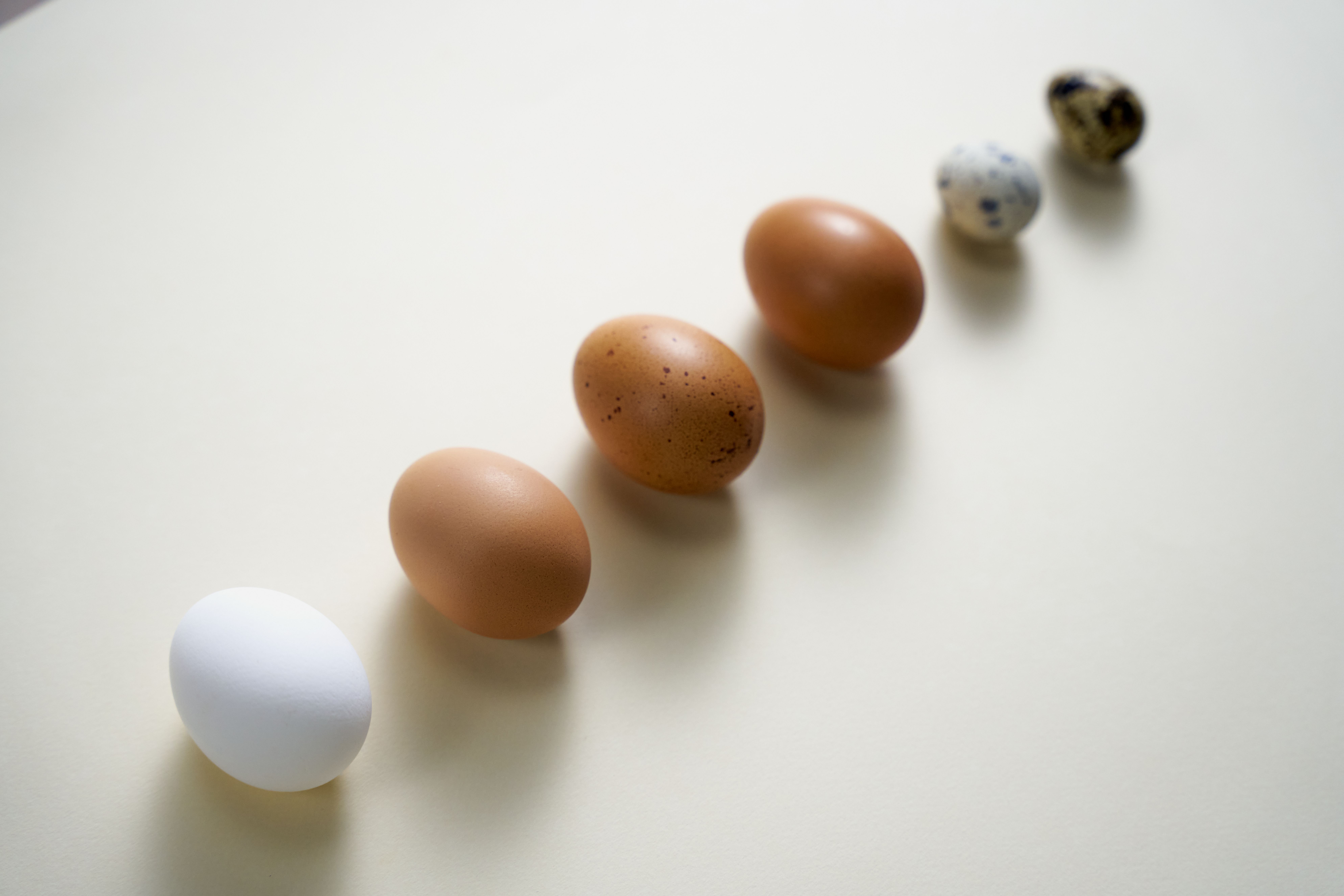
Eggs are a compact, affordable source of high-quality protein, choline and vitamin D — nutrients otherwise harder to get enough of in a typical diet.

Common eggs

Chicken eggs are by far the most widely eaten, though duck and quail eggs also appear in some cuisines. All are nutritionally similar, differing mainly in size and richness.

Health influence

Benefit: eggs supply all nine essential amino acids along with choline, an important nutrient for brain and liver function that many diets fall short of.

Watch for: eggs contain dietary cholesterol, historically restricted, though current major guidelines generally consider moderate intake acceptable for most healthy adults, since dietary cholesterol affects blood cholesterol less than saturated fat does for most people. Those with diabetes or existing cardiovascular disease are often advised to keep intake moderate and discuss it with their own health provider. How eggs are cooked matters too — frying in butter adds considerably more saturated fat than boiling or poaching.

Practical choices

  1. Boil, poach or scramble with minimal added fat rather than deep-frying.
  2. Pair eggs with vegetables to build a more balanced meal.
  3. If managing cholesterol or diabetes, discuss a sensible weekly intake with your own healthcare provider.
  4. Use eggs as an affordable protein swap for higher-fat meats in some meals.


Explore

Whole Chicken Eggs

Whole Chicken Eggs

A raw or cooked egg with both white and yolk intact, the most common form eggs are sold in.

Learn more
Egg Whites

Egg Whites

The clear, protein-rich part of the egg, popular on its own for a lower-fat, high-protein option.

Learn more
Egg Yolks

Egg Yolks

The yellow, fat-rich centre of the egg, containing most of its vitamins and flavour.

Learn more
Free-Range Eggs

Free-Range Eggs

Eggs from hens allowed outdoor access, rather than being kept exclusively indoors.

Learn more
Organic Eggs

Organic Eggs

Eggs from hens fed organic feed and raised without synthetic pesticides or fertilisers.

Learn more
Omega-3 Enriched Eggs

Omega-3 Enriched Eggs

Eggs from hens fed a diet enriched with flaxseed or fish oil, boosting the omega-3 content of the yolk.

Learn more
Pasteurised Eggs

Pasteurised Eggs

Eggs heat-treated to kill harmful bacteria while still raw, safe to use in dishes that will not be cooked further.

Learn more
Boiled Eggs

Boiled Eggs

Eggs cooked in their shell in simmering water, soft or hard depending on cooking time.

Learn more
Fresh Duck Eggs

Fresh Duck Eggs

A larger, richer egg than a chicken egg, with a bigger yolk-to-white ratio.

Learn more
Salted Duck Eggs

Salted Duck Eggs

Duck eggs cured in brine or salted clay until firm and intensely salty, a staple of Chinese cooking.

Learn more
Century Eggs

Century Eggs

Duck, chicken, or quail eggs preserved in an alkaline mixture for weeks until the yolk turns dark and creamy.

Learn more
Duck Egg Yolks

Duck Egg Yolks

The rich, deep orange yolk of a duck egg, often used to add richness to baking.

Learn more
Fresh Quail Eggs

Fresh Quail Eggs

Tiny, delicately flavoured eggs often used as a garnish or in bite-sized appetisers.

Learn more
Boiled Quail Eggs

Boiled Quail Eggs

Quail eggs cooked in their shell, then peeled for snacking or garnishing.

Learn more
Pickled Quail Eggs

Pickled Quail Eggs

Boiled quail eggs preserved in a vinegar brine, eaten as a tangy snack.

Learn more
Canned Quail Eggs

Canned Quail Eggs

Pre-cooked, peeled quail eggs preserved in a can for convenience.

Learn more
Egg Products

Egg Products

Pasteurised, powdered, or separated, egg products offer the same nutrition as whole eggs in a form suited to food service, baking, or extended shelf life.

Learn more

Comments

No comments yet.