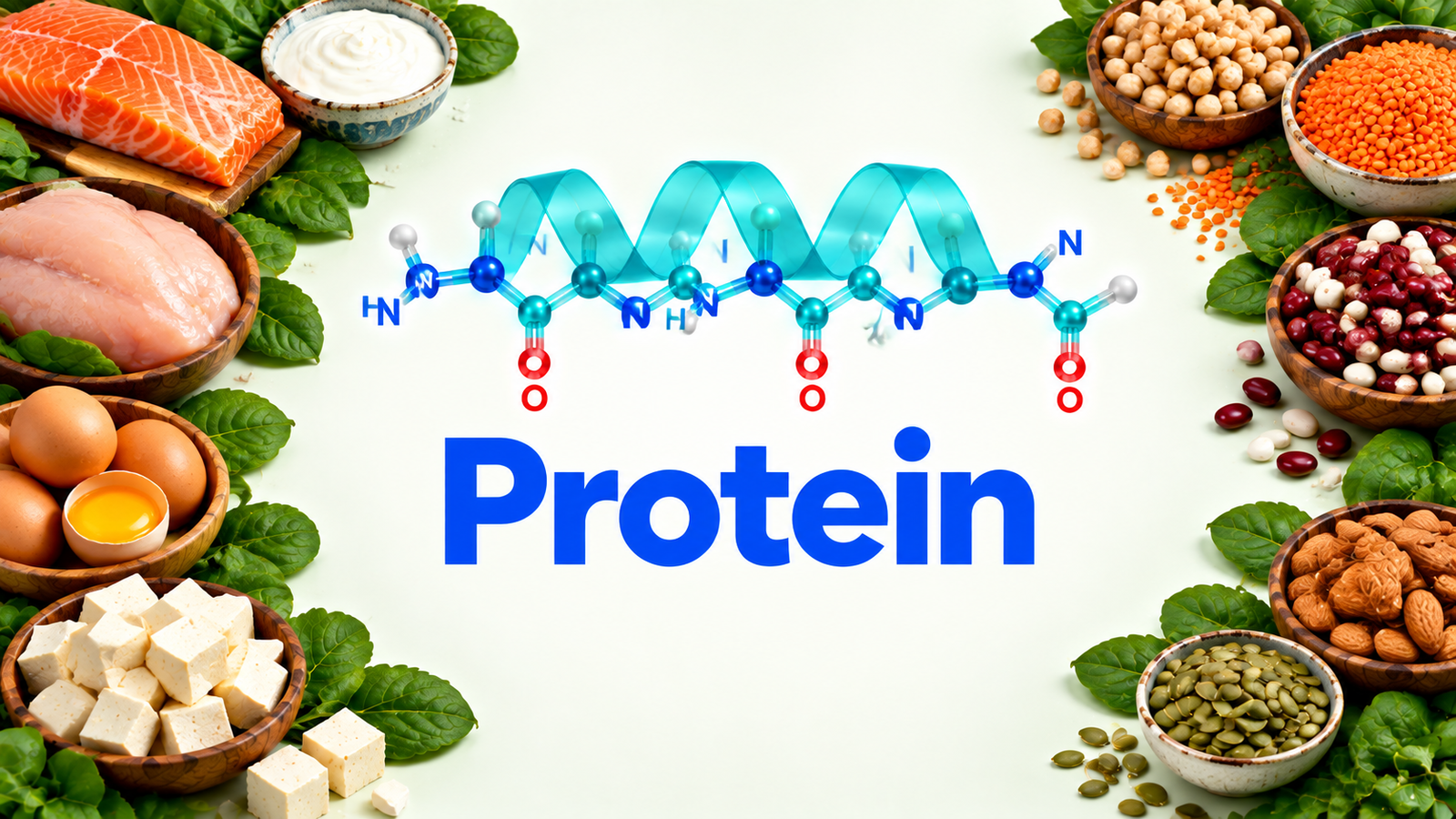
Protein builds and repairs muscle, bone, skin, enzymes, hormones and immune cells. It is needed by everyone, not only athletes, and is especially important during growth, older age, illness and physical training.
What is it?
Proteins are chains of amino acids. The body uses 20 amino acids; nine are essential and must come from food. Animal foods, soya and a few other foods provide all nine in good proportions ("complete" protein); most plant foods are lower in one or more, so eating a variety of plant proteins over the day covers needs. Protein provides about 4 kilocalories per gram. See Amino acids.
What it does
- Builds and repairs muscle, bone, skin, hair and nails
- Makes enzymes, hormones, antibodies and transport proteins
- Helps you feel full after meals
- Can supply energy when carbohydrate and fat are low
Food sources
Meat and poultry, fish and seafood, eggs, milk, yoghurt and cheese, legumes (beans, lentils, chickpeas), tofu, tempeh, nuts and seeds and wholegrains. A vegetarian or vegan diet can provide enough protein with a variety of legumes, soya foods, grains, nuts and seeds.
Singapore food examples
- Fish and seafood — steamed fish, fish soup, prawns, sotong
- Chicken, lean beef, mutton and pork
- Eggs, tofu, tempeh, tau kwa and taupok
- Dhal, chickpeas, kidney beans and edamame
- Milk, soy milk, yoghurt and cheese
- Yong tau foo with fish paste, tofu and vegetables in clear soup
How much do I need?
Singapore's RDA table does not list protein, but its Healthy Plate approach suggests about a quarter of the plate from protein foods — see Singapore's dietary guidelines for adults (HealthHub). The US and Canadian RDA for adults is 0.8 g of protein per kilogram of body weight a day, or about 56 g for a 70 kg adult, with acceptable range 10 to 35 percent of energy.
Older adults, people recovering from illness and people who train hard often benefit from more — roughly 1.0 to 1.2 g per kilogram in older age and 1.2 to 2.0 g per kilogram for strength and endurance training — ideally spread over meals. Ask a doctor or dietitian for personal advice, especially with kidney disease.
Low intake and deficiency
Too little protein over time causes muscle loss, weakness, slow wound healing, hair thinning, swelling (oedema) and frequent infections. In severe cases, particularly in childhood, it causes stunting and the swollen belly of kwashiorkor. Risks are higher in older adults with poor appetite, people with restrictive or very low-calorie diets, illness or surgery, and people with digestive conditions.
Too much and safety
For healthy people, higher protein intakes are generally safe, but there is no benefit above what the body can use; extra is burned for energy or stored as fat. People with chronic kidney disease may need to limit protein. Diets high in red and processed meat are linked to higher risks of heart disease and bowel cancer, so choose fish, poultry, eggs, legumes and tofu more often and limit processed meat.
Absorption and bioavailability
Proteins are digested into amino acids and small peptides in the stomach and small intestine and absorbed almost completely. Animal proteins are digested slightly more fully (about 90 to 99 percent) than plant proteins (about 70 to 90 percent), because plant foods contain fibre and compounds that bind protein. Combining grains with legumes balances amino acids.
Spreading protein over meals (about 20 to 30 g per meal) may support muscle maintenance better than eating most of it at dinner.
Connection to daily life
- Exercise and recovery: protein repairs and builds muscle after exercise — see Exercise
- Healthy ageing: enough protein, plus strength training, helps preserve muscle and independence
- Appetite and weight: protein helps with fullness and steadier energy
- Sleep and stress: regular meals including protein help limit cravings and energy dips — see Sleep and Stress
Sources: 1. National Academies of Sciences, Engineering, and Medicine — Dietary Reference Intakes for Energy, Carbohydrate, Fiber, Fat, Fatty Acids, Cholesterol, Protein, and Amino Acids (2005) 2. HealthHub Singapore — Recommended Dietary Allowances: https://www.healthhub.sg/well-being-and-lifestyle/food-diet-and-nutrition/recommended_dietary_allowances 3. HealthHub Singapore — Dietary guidelines for adults: https://www.healthhub.sg/well-being-and-lifestyle/food-diet-and-nutrition/dietary_guidelines_adults 4. Health Promotion Board — Singapore Food Insights Database (SG FoodID): https://www.hpb.gov.sg/healthy-living/food-and-beverage/sgfoodid/ 5. FAO/INFOODS — Food composition tables and databases: https://www.fao.org/food-composition/tables-and-databases/en/

Comments
No comments yet.
Log in to leave a comment.